
 Back
Back





IN THE HIGH COURT FOR THE STATE OF TELANGANA AT HYDERABAD
ALOK ARADHE, CJ., J. SREENIVAS RAO, J.
Campaign for Housing and Tenural Rights (CHATRI), represented by its Secretary, Sri S. Jeevan Kumar S/o. Late S.V. Rama Krishna and Others - Petitioners
Versus
The Government of Andhra Pradesh, Represented by its Chief Secretary to Government, Revenue Department, A.P. Secretariat, Hyderabad and Others - Respondents
Writ Petition No.17623 Of 2007
Decided On : 04-10-2024
(A) Constitution of India – Articles 14, 37, 38, 39, 43, and 46 – Public Interest Litigation – Petitioners challenged allotment of public properties to private entities without tenders, claiming violations of constitutional provisions and public trust doctrine. The court emphasized the necessity of fair and transparent policies in public property dealings. (Paras 1-3, 9-10, 12-13)
(B) Judicial Review – The court reiterated that policy decisions by the State should not be interfered with unless proven arbitrary or illegal, emphasizing the importance of public interest in such matters. (Paras 9, 10, 19)
Facts of the case: Petitioners, representing public interest, alleged unconstitutional allotments of land to private firms without competitive bidding, claiming it violated constitutional rights and public trust. (Paras 1-3)
Findings of Court: The court upheld the State's policy for land allotment aimed at promoting industrial growth while directing cancellation of allotments where no progress was made. (Paras 36)
Issues: The main issues included the legality of land allotments without tenders and the adherence to constitutional principles in public property dealings. (Paras 1-3)
Ratio Decidendi: The court ruled that while the State has discretion in land allotment, it must ensure fairness and transparency, adhering to constitutional mandates. (Paras 9-10, 19)
Result: Writ petition disposed of with directions for cancellation of certain allotments. (Para 37)
ORDER :
(J. Sreenivas Rao, J.) :
In this writ petition filed as a public interest litigation, the petitioner has prayed for the following reliefs:
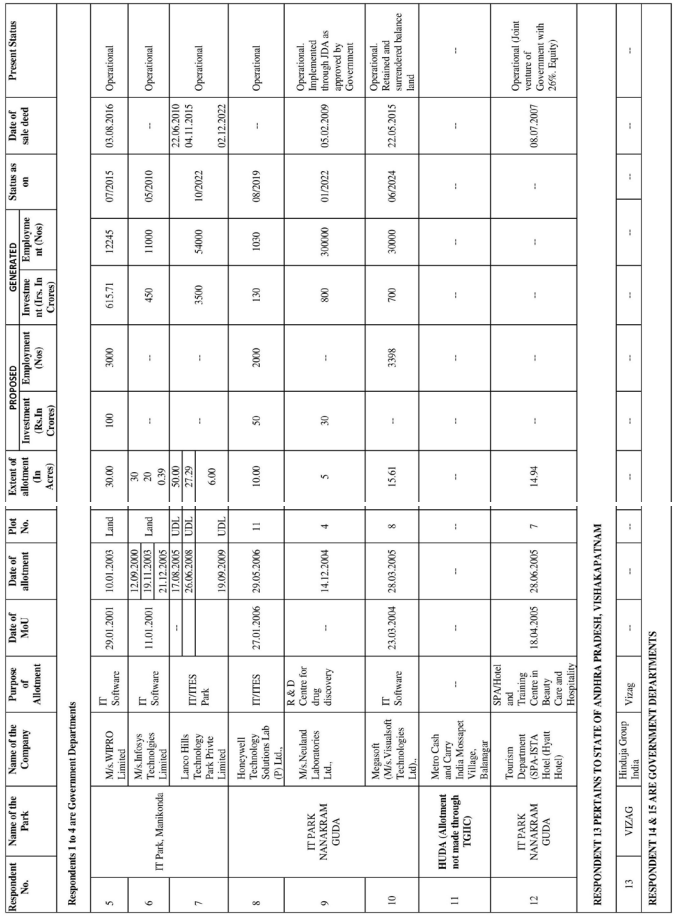
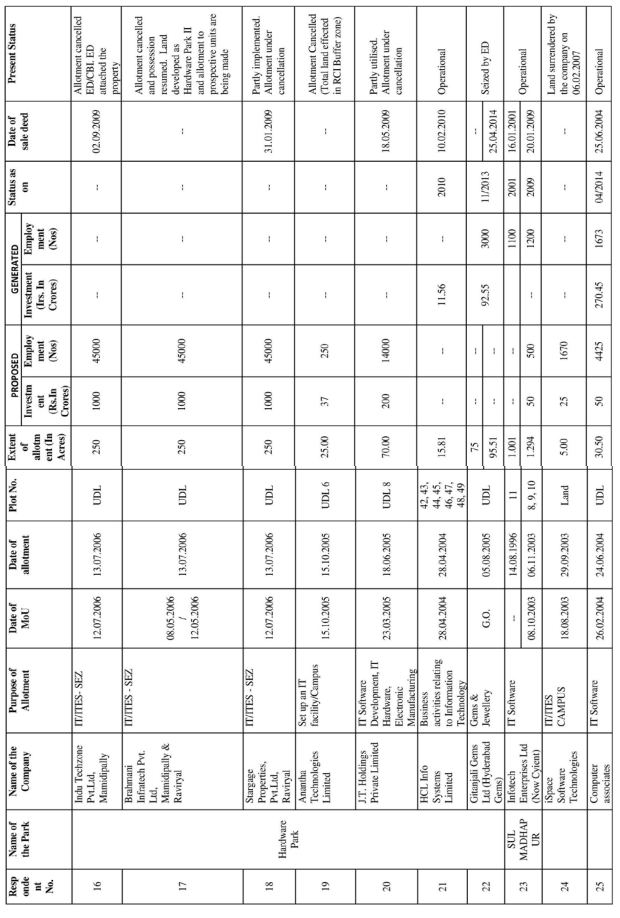
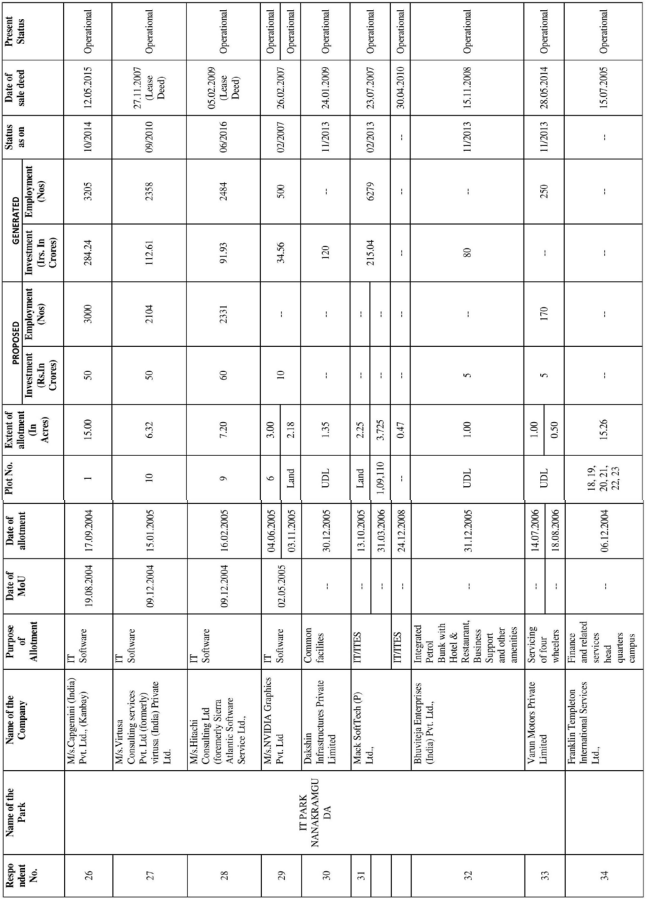
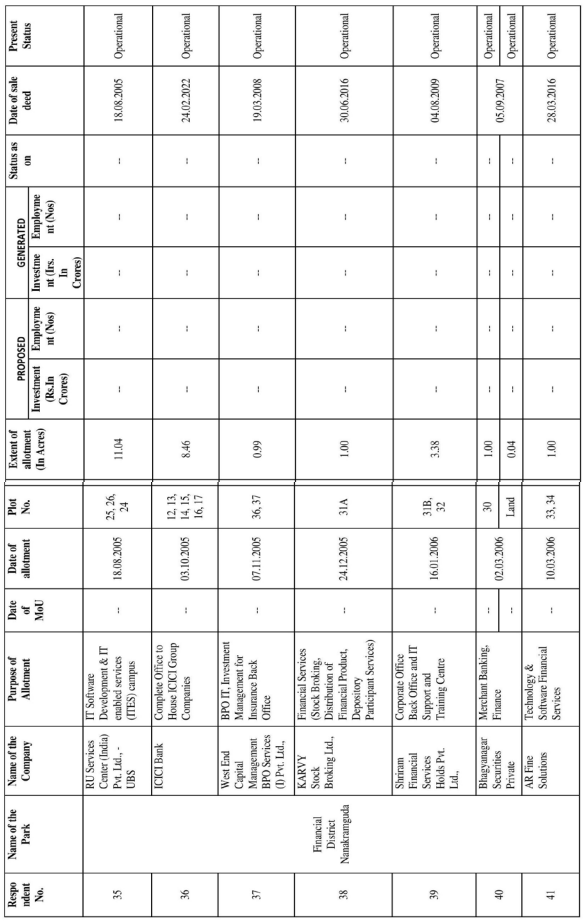
(1) Action of the respondent Nos.1 to 4 in allotting public properties to private companies, firms, individuals either by way of outright sale or lease without calling for tenders or advertisement as unconstitutional, in violation of Article 14 and Part VI of the Constitution and without jurisdiction, ultra vires, void ab initio, arbitrary, illegal and violative of doctrine of public trust and to direct the official respondents to review all the allotments made during the last ten years by way of sale/lease and to collect market value/rent from the allottees.
(2) To cancel the allotments and to resume the lands in all cases where the development has not commenced or the substantial progress has not been made strictly as per the terms and conditions of the allotment and regulations.
(3) To declare the Regulations 4 to 6 of APIIC Allotment Regulations, 1998 providing for allotment without tenders or bids as arbitrary, unreasonable, contrary to the provisions of Article 14 and Part IV of the Constitution of India and unconstitutional.
(4) To direct the official respondents to allot the Government lands either by way of lease or sale only after inviting bids/tenders from the eligible applicants by issuing advertisement in the news papers.
(5) Not to reserve the lands in favour of allottees for future expansion and to declare the Clause-2 of the letter dt. 28.10.2005 issued by the 2nd respondent to respondent No.13 fixing the sale price for 50 acres of the land to be handed over after completion of the First Phase as arbitrary, illegal, unconstitutional and ultra vires the provisions of APIIC Allotment regulations and to set aside the same.
2. Heard Sri Gandra Mohan Rao, learned Senior Counsel appearing for the petitioners, Sri A.Sudarshan Reddy, learned Advocate General appearing for respondent Nos.1 and 2, Smt. T.V.Sudha, learned counsel representing Sri V.Narasimha Goud, learned standing counsel for respondent No.3, Sri Nitin Prasad, learned counsel for respondent No.6, Sri Challa Gunaranjan, learned counsel for respondent No.7, Sri G.V.S.Ganesh, learned counsel for respondent Nos.8 and 11, Sri Koka Satyanarayana Rao, learned counsel for respondent No.9, Sri I. Ramesh, learned counsel for respondent No.12 and Sri P. Sri Raghu Ram, learned senior counsel appearing for respondent Nos.18 and 20.
3. The brief facts of the case:
3.1. According to the petitioners, petitioner No.1 is a voluntary organization registered under the Societies Registration Act and is engaged in campaigning and organizing people’s struggle for housing rights and working among the slum dwellers of Hyderabad and Ranga Reddy Districts for the last several years. The petitioner No.2 is retired from the service of VST Industries Limited, as Projects and Engineering Services Manager and is a Member and Secretary of Forum for Better Hyderabad, an NGO working for environmental issues to preserve, protect and improve the environment in order to maintain and improve the living environment in Hyderabad. The petitioner No.3 served as Airman in Indian Air Force. After discharging from the services, he was selected as Inspector in Central Excise Department and worked in the said Department for nearly 20 years and retired as Superintendent of Central Exercise in the year 2000. Since then, he is practicing as an Advocate in the Courts of Hyderabad, Ranga Reddy and also at High Court of Andhra Pradesh.
3.2. It is the case of the petitioners that the natural resources of the community i.e., land, air, water, etc., are required to be utilized for the benefit of largest number of the people. The State being custodian of the people and holding the natural resources of the community is under an obligation to utilize and apply the natural resources of the State for the common benefit of the people and to ensure that there is no concentrat
AI
The State must ensure fair and transparent policies in public property dealings, adhering to constitutional mandates, while judicial review of policy decisions is limited to cases of arbitrariness or....

The court upheld the government's policy for land allotment to promote the film industry, emphasizing compliance with Article 14 and the importance of transparency in public contracts.

Process of applying the pick and choose policy and making allotments at the whims and fancies of the persons in power continued in the State.

The court affirmed the constitutional validity of the MIDC's priority allotment policy, emphasizing that online applications and fair process must apply uniformly, without arbitrary distinctions amon....

Service Law - Allotment of flat - Rule 7(i) of Policy provides that no application shall be entertained for accommodation if employee is retiring on superannuation in next six months, meaning there b....

The court emphasized the legal principles related to the disposal of public properties, legitimate expectations, and the authority's discretion in allotment decisions.

Government land allotments must comply with statutory regulations, ensuring fairness and transparency in public interest; arbitrary allotments without adherence to law are unconstitutional.

Government actions in granting licenses must align with principles of reasonableness and public interest, ensuring no arbitrary decision-making that creates monopolies.
State actions regarding license distribution must comply with fairness, non-arbitrariness, and promote public interest by avoiding monopolies.

The allocation of government land to the Indian School of Business is lawful and serves a public interest, underlining the government's responsibility to ensure transparency and equitable use of publ....



An indispensable Tool for Legal Professionals, Endorsed by Various High Court and Judicial Officers
Please visit our Training & Support
Center or Contact Us for assistance

Scan Me!
India’s Legal research and Law Firm App, Download now!


For Daily Legal Updates, Join us on :



 Back to top


