


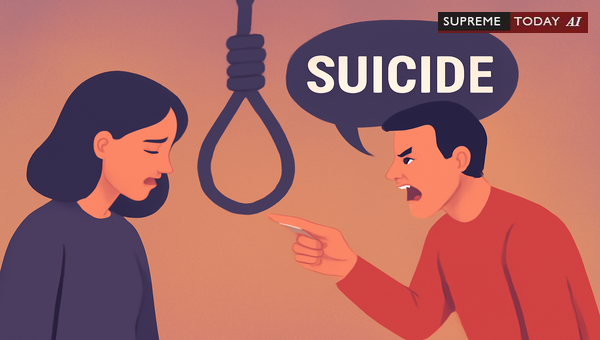
via Abusive Language: IPC 306 Explained
In today's fast-paced and often stressful world, heated arguments and abusive exchanges are unfortunately common. But what happens when such verbal abuse allegedly pushes someone to take their own life? Can abusive language legally constitute under Indian law? This question—Suicide Due to Abusive Language —raises critical issues around intent, evidence, and .
This blog post delves into the legal framework, landmark cases, and judicial interpretations under . We'll examine when abusive language may cross into abetment territory and when it falls short. Note: This is general information based on case law and not specific legal advice. Consult a qualified lawyer for personalized guidance.
Legal Framework: Understanding Section 306 IPC
Section 306 IPC punishes abetment of suicide with imprisonment up to 10 years and a fine. It requires proof of abetment as defined under , which includes , , or that directly leads to the suicide. Mere harsh words aren't enough; courts demand (guilty intent) and a between the accused's actions and the suicide. 2023 0 Supreme(Kar) 264
Key ingredients for conviction:- Abetment: Direct or indirect incitement to suicide.- Intent: Evidence that the accused aimed to provoke the act. 2024 5 Supreme 577- : The suicide must be a foreseeable result of the conduct.
As courts have repeatedly emphasized, The act of the Accused, however, insulting the deceased by using abusive language will not, by itself, constitute the abetment of suicide. There should be evidence capable of suggesting that the accused intended by such act to instigate the deceased to commit suicide. 2023 0 Supreme(Kar) 264 2022 0 Supreme(MP) 1387
When Abusive Language May Constitute Abetment
In rare cases, combined with evidence of harassment can support abetment charges. For instance, one judgment found that appellants' ongoing abusive language and behavior directly contributed to the deceased's suicide. The deceased left a suicide note citing harassment, which the court deemed significant proof of . 2022 0 Supreme(UK) 54
Similarly, behavior causing deep and may qualify as if it demonstrably drives the victim to suicide. through was recognized where actions led to profound insult. 2011 0 Supreme(MP) 1436
can satisfy Section 306 IPC ingredients, as seen in cases where relentless abuse eroded the victim's will to live. 2023 0 Supreme(Mad) 1481
When Abusive Language Does NOT Amount to Abetment
Most cases dismiss abetment claims based on abusive language alone. Courts stress the absence of intent and direct evidence linking words to suicide.
Lack of and Intent
Multiple rulings hold that mere use of abusive language without a clear intention to instigate or aid in suicide does not amount to abetment. is essential. 2019 0 Supreme(P&H) 2700 2023 0 Supreme(Cal) 63 2018 0 Supreme(Bom) 1630
It is also to be borne in mind that in cases of alleged abetment of suicide there must be proof of direct or indirect acts of incitement to the commission of suicide. 2024 5 Supreme 577
Insufficient Evidence and Mere Words
Courts rule that mere words, without accompanying actions or evidence of intentional , are insufficient. In one case, abusive words were cited, but no direct link was proven. 2018 0 Supreme(Mad) 3088 2013 0 Supreme(MP) 156
A recurring theme is proximity: Suicide by the deceased on is not proximate to the abusive language uttered by the appellant on . The two-day gap allowed time for reflection, breaking . 2024 0 Supreme(Ker) 1491 2025 2 Supreme 695 2024 0 Supreme(Ker) 1484 2025 0 Supreme(Kar) 728 2025 0 Supreme(Kar) 427 2024 0 Supreme(Bom) 881
Witnesses noted the deceased was upset over other issues, like childlessness, not just abuse. 2024 0 Supreme(Ker) 1491
Essential Ingredients Not Met
The essential ingredients of the offence under Section 306 IPC are: (i) the abetment; (ii) the intention of the accused to aid or instigate or abet the deceased to commit suicide. Without these, no conviction. 2025 0 Supreme(AP) 424 2024 0 Supreme(Guj) 1822 2021 0 Supreme(All) 528 2021 0 Supreme(All) 1456
By no stretch of imagination, the alleged acts of the appellants can amount to to commit suicide. 2025 2 Supreme 695 2025 0 Supreme(Kar) 728
Counterarguments and Defenses
Defendants often succeed by arguing no intent or unforeseeable consequences. If the suicide wasn't a direct, intended outcome, abetment fails. 2015 0 Supreme(Bom) 740
Even in emotional abuse scenarios, courts require proof beyond outbursts: Assuming that the deceased had taken the abusive language seriously, he had enough time in between to think over and reflect and, therefore, it cannot be said that the abusive language... drove the deceased to commit suicide. 2025 0 Supreme(Kar) 427
Integrating Broader Judicial Trends
From analyzed cases, patterns emerge:- Timing Matters: Non-proximate abuse weakens claims. 2024 0 Supreme(Ker) 1491 2025 2 Supreme 695- Holistic Evidence: Suicide notes, witnesses, and patterns of behavior are crucial, but insults alone fail. 2022 0 Supreme(MP) 1387- High Burden of Proof: Prosecution must show incitement capability. 2023 0 Supreme(Mad) 1481
In summary, while continuous harassment may tip the scales, isolated or non-intentional abuse typically does not. Courts protect against over-criminalizing verbal disputes.
Key Takeaways for Individuals and Families
- For Accused: Gather evidence showing lack of intent, time gaps, or alternative suicide causes.
- For Victims' Families: Document patterns, notes, and impacts to prove .
- Prevention: Seek counseling for abusive dynamics; early intervention saves lives.
Recommendations: In abetment allegations, focus on and conduct's direct impact. Comprehensive evidence is key to establishing or refuting claims.
Conclusion
due to abusive language under Section 306 IPC hinges on intent, proximity, and evidence—not words alone. While severe, ongoing abuse may qualify, courts generally require more than harsh language. 2022 0 Supreme(UK) 54 2019 0 Supreme(P&H) 2700
This analysis draws from precedents like 2022 0 Supreme(UK) 54, 2019 0 Supreme(P&H) 2700, 2018 0 Supreme(Mad) 3088, 2023 0 Supreme(Cal) 63, 2011 0 Supreme(MP) 1436, 2015 0 Supreme(Bom) 740, , and others including 2024 0 Supreme(Ker) 1491, 2025 2 Supreme 695, 2023 0 Supreme(Kar) 264. Stay informed, but always consult legal experts for case-specific advice.
#AbetmentToSuicide, #IPC306, #AbusiveLanguageLaw












