


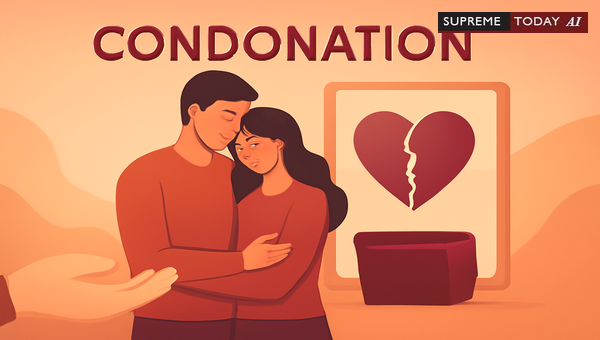
in Legal Terms: What It Means and Why It Matters
In the complex world of family law, particularly matrimonial disputes, certain concepts can significantly impact or reconciliation efforts. One such pivotal term is . If you've ever wondered, What is in legal terms?, you're not alone. This blog post dives deep into its definition, nature, legal precedents, and practical implications, drawing from established case law and principles to provide clarity.
Whether you're navigating a marital conflict or simply seeking to understand legal nuances, grasping can help inform your decisions. Note that this is general information and not specific legal advice—consult a qualified attorney for personalized guidance.
Definition of
refers to the forgiveness of a , coupled with the restoration of the offending spouse to the same position they occupied before the offence was committed. It requires two essential elements: forgiveness of the offence and restoration of the offending spouse's status 1993 0 Supreme(Raj) 342 2011 0 Supreme(Del) 129.
As articulated in key judgments, means forgiveness of the and the restoration of offending spouse to the same position as he or she occupied before the offence was committed 2013 0 Supreme(Ker) 591. This restoration implies a return to or normal marital relations, effectively waiving the right to pursue remedies for the past wrong.
In essence, acts as a of the injured spouse's rights. It is not mere oversight but a deliberate act: is a word of technical import, which means and implies wiping out of all rights of injured spouse to take matrimonial proceedings 2011 0 Supreme(Raj) 652.
Nature of : Conditional, Not Absolute
is characterized as , implying that the offending spouse must not commit further matrimonial offences. If a new offence occurs, the effect of the prior is nullified 1984 0 Supreme(Mad) 201 2005 0 Supreme(P&H) 652. It is not absolute or unconditional; rather, it carries an implied condition that the offending spouse will refrain from repeating the misconduct 2000 0 Supreme(All) 1113 2021 0 Supreme(Ker) 411.
This conditional aspect is crucial. Normally carries with it a rider that the injury shall not be repeated. ... is a of the right of the injured spouse to take matrimonial proceedings and it does not amount to forgiveness in the ordinary parlance. cannot be taken to be an absolute and unconditional forgiveness 2009 0 Supreme(P&H) 1254.
In practice, this means past acts of or misconduct, once condoned, remain 'obscured' but can be revived if repetition occurs, balancing mercy with accountability in marital law.
Landmark Legal Precedents on
Indian courts, particularly the , have shaped the understanding of through seminal cases.
- In , the articulated that involves both forgiveness and restoration, emphasizing that it does not erase the offence but obscures it, making it subject to revival upon the commission of new offences 2011 0 Supreme(Del) 129 2000 0 Supreme(All) 1113. The court also noted that acts of , even if previously condoned, can be revived as grounds for divorce if new acts of occur 2021 0 Supreme(Ker) 411 2000 0 Supreme(All) 1113.
These precedents underscore that is not a blanket pardon but a fragile truce dependent on future conduct.
Additional judicial insights reinforce this:- has not been defined... Having waited for four years during which period the wife continued to remain residing at the house of her parents... highlighting how prolonged separation may negate claims 2011 0 Supreme(Raj) 652.
Conditions for Valid
For to hold legal weight, several conditions must be met:- It must be intentional and accompanied by a genuine desire to restore the marital relationship. It cannot be inferred if the offending spouse continues to engage in wrongful conduct 2011 0 Supreme(Del) 129 2021 0 Supreme(Ker) 411.- The concept implies reconciliation, where the injured party waives their right to seek legal remedy for past offences, contingent upon the offending spouse's good behavior moving forward 2021 0 Supreme(Ker) 411 2005 0 Supreme(P&H) 652.
Courts examine post-incident actions closely. Mere words of forgiveness without or mutual effort typically fall short. As noted, As to what constitutes as envisaged under has no where been elaborated under the Act 2009 0 Supreme(P&H) 1254, leaving it to judicial discretion based on facts.
Broader Context: Beyond Matrimony
While is most discussed in matrimonial law, it occasionally appears in other legal contexts, such as condoning delays in filings. Here, it involves excusing delays for substantial justice, with courts applying an elastic interpretation of '' 2023 0 Supreme(Mad) 114. However, the matrimonial usage remains the primary focus, emphasizing relational restoration over procedural leniency.
Practical Implications and Recommendations
Understanding has real-world stakes in divorce petitions under laws like the :- Assess Intentions: When alleging , evaluate both parties' post-offence actions. Continued misconduct revives old grounds.- Document Evidence: Record instances of repetition to counter defenses 2021 0 Supreme(Ker) 411.- Seek Reconciliation Thoughtfully: Ensure any forgiveness is genuine, as superficial efforts may not suffice legally.
Recommendations include:- Document any instances of continued misconduct by the offending spouse to support claims for revival of past offences.- Ensure that any claims of are substantiated with evidence of mutual understanding and intent to restore the marital relationship.
Key Takeaways
- is a legal concept involving and restoration of status, primarily in matrimonial law.
- It is not absolute; future misconduct nullifies it, reviving past offences.
- Precedents like emphasize its revocable nature 2011 0 Supreme(Del) 129 2000 0 Supreme(All) 1113.
- Always approach with caution—intent, reconciliation, and evidence are key.
In summary, offers a path to second chances in marriage but safeguards against abuse through its conditional framework. For those in matrimonial strife, it highlights the interplay of forgiveness and accountability.
Disclaimer: This post provides general insights based on legal precedents and is not a substitute for professional legal advice. Laws vary by jurisdiction, and outcomes depend on specific facts.
References: 1984 0 Supreme(Mad) 201 1993 0 Supreme(Raj) 342 2011 0 Supreme(Del) 129 2005 0 Supreme(P&H) 652 2003 0 Supreme(All) 1346 2021 0 Supreme(Ker) 411 2000 0 Supreme(All) 1113 2013 0 Supreme(Ker) 591 2011 0 Supreme(Raj) 652 2009 0 Supreme(P&H) 1254 2023 0 Supreme(Mad) 114.
#Condonation #MatrimonialLaw #FamilyLaw















