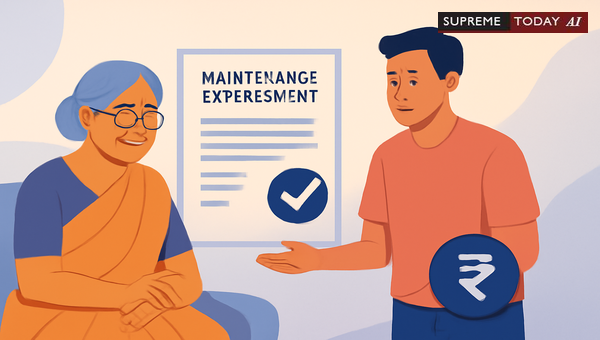
Remedies if Son Ignores Parents' Maintenance Order Under the Act
In India, the Maintenance and Welfare of Parents and Senior Citizens Act, 2007 (often called the Parents Maintenance Act) is a vital law designed to protect elderly parents by ensuring financial support from their children. But what happens when a son, obligated to provide maintenance, simply refuses to pay the amount awarded by a Magistrate? This is a common concern for many senior citizens facing neglect. Under the Maintenance to Parents Act, if the son is not giving the amount awarded by the Magistrate, what is the remedy? This blog post breaks down the available options, drawing from legal provisions and case insights to guide you.
Note: This is general information based on the Act and related judgments. It is not specific legal advice. Consult a qualified lawyer for your situation.
Overview of the Maintenance and Welfare of Parents Act
The Act empowers parents and senior citizens (aged 60+) to claim maintenance from children or relatives who have sufficient means. A Magistrate or Maintenance Tribunal typically awards a monthly amount after assessing the parents' needs and the child's capacity. Once ordered, this becomes a binding court directive. Non-compliance isn't just a family dispute—it's a legal violation with enforceable remedies. 2011 0 Supreme(Mad) 1770
The law prioritizes quick relief through summary proceedings, bypassing lengthy civil suits. This ensures seniors aren't left destitute while waiting for justice. 2015 0 Supreme(P&H) 1817
Key Remedies for Non-Payment of Maintenance
If your son fails to pay, don't delay—prompt action strengthens your case. Here are the primary remedies:
1. Enforcement of the Maintenance Order
Parents can directly approach the Maintenance Tribunal or the issuing court to enforce the order. Courts have inherent powers to compel compliance, such as directing payment through attachment of the son's salary, property, or bank accounts. The court has the authority to ensure compliance with its orders, including the payment of maintenance amounts awarded by the Magistrate. 2011 0 Supreme(Mad) 1770
In practice, tribunals can issue warrants or garnishee orders, making non-payment risky for the defaulter.
2. Filing a Complaint for Non-Payment and Contempt
A straightforward step: file a complaint for willful default. This triggers contempt proceedings, potentially leading to fines, imprisonment, or both. If the son fails to comply with the maintenance order, parents can file a complaint against him for non-payment. The court may take action against the son for contempt of court, which can include fines or other penalties. 2002 0 Supreme(Ori) 574
Courts view such defiance seriously, especially given the Act's welfare focus. For instance, in cases where sons earn well but neglect parents, tribunals have escalated penalties to deter evasion. 2015 0 Supreme(Mad) 3467 The son who is earning in lakhs, shall pay a sum of Rs. 15,000/- per month to the mother.
3. Claiming Arrears of Maintenance
Unpaid amounts accumulate as arrears. Parents can seek recovery of past dues plus ongoing payments. The court may impose interest or direct lump-sum settlement. This remedy pairs well with enforcement actions. 2011 0 Supreme(Mad) 1770
4. Eviction Proceedings Under Section 23
If the son lives with parents and is abusive, neglectful, or harassing, file for eviction. Section 23 empowers the Tribunal to order the son out, restoring peaceful possession to parents. In cases where the son is living with the parents and is abusive or neglectful, parents can file for eviction under Section 23 of the Act. 2017 0 Supreme(Bom) 758 2017 0 Supreme(P&H) 228
Relatedly, if property was gifted to the son with maintenance conditions, non-compliance can lead to deed annulment—but only if explicitly stated. A gift deed must explicitly include conditions for maintenance to be enforceable under Section 23. 2024 0 Supreme(Kar) 404
5. Summary Proceedings for Swift Justice
The Act's summary nature ensures fast-track hearings, ideal for urgent needs. No prolonged evidence battles—just focused relief. 2015 0 Supreme(P&H) 1817
Insights from Related Case Laws and Provisions
While the Parents Act is specific, it intersects with other laws like Section 125 CrPC (for children claiming from parents) and Hindu Adoptions and Maintenance Act (HAM Act). These highlight reciprocal duties but affirm parents' stronger protections under the 2007 Act.
For contrast, under CrPC 125, major children lose maintenance claims post-majority unless disabled—unlike parents' ongoing rights. A father is liable to maintain his unmarried daughter only until she attains majority unless she proves inability. 2024 0 Supreme(Guj) 1626
In parental disputes, courts emphasize obligations: The respondent may be morally liable and duty bound to maintain her parents-in-law but the Court cannot compel her to grant such maintenance under Section 22 (1) of the Act. 2025 Supreme(Online)(CHH) 3605 (Note: Focus here is sons, but daughters share liability.)
A key ruling directed a high-earning son: Though his parents may not depend upon him for their maintenance, as a son the appellant has to take care of them by spending some money on them. 2012 0 Supreme(Mad) 1756 Courts balance finances, often hiking awards amid rising costs. 2022 0 Supreme(Cal) 105
Even daughters must provide shelter: In one case, a daughter was ordered to house parents after canceling a gift deed improperly. 2022 0 Supreme(Cal) 105
These precedents reinforce enforcement: Tribunals direct payments like Rs. 10,000 monthly, considering rent, food, and lifestyle. 2012 0 Supreme(Mad) 1756
Practical Steps and Recommendations
To maximize success:- Document Everything: Record orders, payment demands, communications, and defaults. This bolsters complaints.- Act Promptly: File within limitation periods to claim arrears.- Seek Legal Aid: Free services via Legal Services Authorities help seniors.- Explore Mediation: Tribunals encourage amicable settlements first.- Multiple Children?: Liability is joint; pursue all able sons/daughters. 2015 0 Supreme(Mad) 3467
| Remedy | When to Use | Potential Outcome ||--------|-------------|-------------------|| Enforcement | Immediate non-payment | Attachment of assets || Contempt Complaint | Willful defiance | Fines/imprisonment || Arrears Claim | Accumulated dues | Lump-sum recovery || Eviction (Sec 23) | Harassment/cohabitation | Possession order |
Conclusion and Key Takeaways
The Maintenance and Welfare of Parents Act equips seniors with robust remedies against non-paying sons—from enforcement and contempt to eviction and arrears recovery. Courts prioritize welfare, often directing substantial payments based on the child's means. 2002 0 Supreme(Ori) 574 2011 0 Supreme(Mad) 1770
Key Takeaways:- Non-payment triggers enforceable actions; don't hesitate to approach tribunals.- Document meticulously and consult lawyers early.- The Act ensures dignity in old age—your rights are protected.
References: 2011 0 Supreme(Mad) 1770 2002 0 Supreme(Ori) 574 2017 0 Supreme(Bom) 758 2015 0 Supreme(P&H) 1817 2017 0 Supreme(P&H) 228 2024 0 Supreme(Kar) 404 2022 0 Supreme(Cal) 105 2015 0 Supreme(Mad) 3467 2012 0 Supreme(Mad) 1756
Facing this issue? Reach out to a local Maintenance Tribunal or legal expert today. Stay informed, stay empowered.
#ParentsMaintenanceAct, #ElderRights, #MaintenanceRemedies