


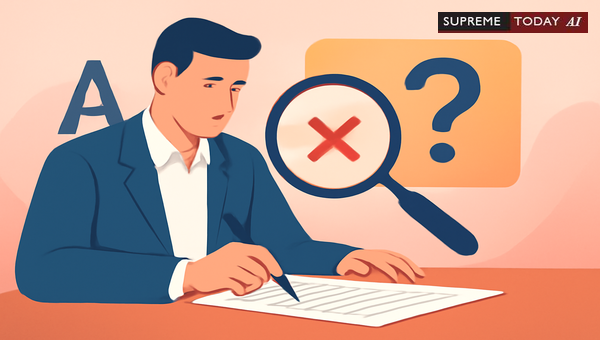
Does a Typing Error Make Your Defective?
In the fast-paced world of legal filings, a small mistake like a typing error can spark anxiety. Does typing error does not make defective hold true? Many litigants worry that a minor slip could derail their case. Fortunately, generally take a pragmatic view: typographical errors typically do not render a or defective. However, this leniency has limits, hinging on and the nature of the error.
This post delves into judicial interpretations, key principles, and practical insights from case law. Remember, this is general information based on precedents—not specific legal advice. Consult a qualified lawyer for your situation.
Understanding Typographical Errors in Legal Documents
A typographical error, or typo, refers to mistakes in printed or typed material during the printing or typing process. Courts define it narrowly: The term typographical error is defined as a mistake made in the printed/typed material during a printing/typing process. The term includes errors due to mechanical failure or slips of the hand or finger, but usually excludes errors of ignorance. 2012 1 Supreme 568
Key characteristics of correctable typos:- Minor and - Occurring during mechanical typing/printing- Not stemming from neglect or oversight
In contrast, errors from failing to perform an obligation are not typos: The act of neglecting to perform an action which one has an obligation to do cannot be called as a typographical error. 2012 1 Supreme 568
This distinction ensures parties exercise care in drafting. A simple misspelling might be overlooked, but omitting mandatory details due to carelessness won't qualify.
Judicial Stance: Typos Rarely Invalidate Complaints
consistently hold that minor typing errors do not make a defective, provided was exercised. For instance, amendments for genuine typos are permissible pre-trial if . Post-trial changes are stricter, especially for substantive issues. 2022 0 Supreme(AP) 729 2025 Supreme(Online)(Bom) 3962
In one ruling, the court rejected a claim of typo for a multi-sentence omission: In such circumstances, it could not be construed that was adhered to and in any event, omission of mandatory requirement running into 3 to 4 sentences could not be a typographical error as claimed by the plaintiffs. 2012 1 Supreme 568
Core principle: Courts prioritize substance over form. A typo doesn't vitiate proceedings if the intent is clear and no prejudice results.
The Role of
is pivotal. Errors preventable by reasonable care fall outside typo protections. Lack of attention disqualifies amendments, particularly after trial starts. 2022 0 Supreme(AP) 729
Examples from Consumer and Civil Cases
Consumer forums echo this. In a fire insurance dispute, a policy listed Rs. 3 lacs instead of Rs. 2 lacs due to typing: the complainant couldn't exploit it after accepting payment silently. The noted it as a typing error in indicating the amount of insurance in the policy document.
UNITED INDIA INSURANCE CO. LTD. VS MOHAN LAL & SONS
Similarly, in recruitment ads, typos listing typing as preferential (not essential) were corrected without invalidating processes. One court held: the advertisement suffered from an error to that extent. Candidates couldn't claim rights from the mistake.
AND OTHERS
2009 0 Supreme(All) 2797In land acquisition notices, a measurement error (0.0112 sq.m. vs. 12 sq.m.) was deemed a purely due to an error in typing, accepted given consistent other details. 2012 0 Supreme(Mad) 3259
Civil compromises also allow corrections: a tauzi number typo (525 vs. 5225) was an accidental slip of pen or error which has cropped in process of typing, amendable under if identity unchanged. 2012 0 Supreme(Pat) 96
Santosh Kumar Singh VS State of Bihar through Chief Secretary
Post-Trial Amendments: Narrow Scope
Once trial commences, amendments face hurdles. Neglect-based errors are typically barred: Amendments after the commencement of trial, especially those involving substantive changes or corrections of neglect, are generally disallowed unless they qualify as typographical errors. 2012 1 Supreme 568 2022 0 Supreme(AP) 729 2025 Supreme(Online)(Bom) 3962 2023 0 Supreme(P&H) 1841
A case clarified: The court found that the direction to furnish a Bank Guarantee... is perfectly legal. There was no reason for the Appellant to proceed on the basis that the direction had been issued by mistake. 2023 0 Supreme(P&H) 1841
In consumer matters, even correct typos : a maturity amount of Rs. 31,170/- was adjusted to Rs. 31,700/- as an adverntent typing error only.
Exceptions and When Typos Fail
Not all errors qualify:- Ignorance or neglect: Excluded explicitly. 2012 1 Supreme 568- Substantive omissions: Multi-sentence gaps aren't typos. 2012 1 Supreme 568- Post-trial without diligence: Likely rejected. 2022 0 Supreme(AP) 729 2023 0 Supreme(P&H) 1841- Commercial disputes: A photocopier buyer's issues weren't manufacturing defects but maintenance lapses; no consumer status for profit-making.
In , a verification styled as Declaration was substantial compliance despite form error—not a material defect. 2005 0 Supreme(Del) 279
Practical Recommendations
To safeguard your filings:- Exercise : Proofread meticulously; use tools for accuracy.- Seek early amendments: File for corrections promptly if typos occur.- Document intent: Clear pleadings minimize disputes.- Post-trial caution: Substantive changes need strong justification.
Parties should avoid relying on typos for advantage, as courts scrutinize motives.
Key Takeaways
- Minor, typing errors generally do not defective complaints or pleadings.
- separates correctable typos from negligence.
- Amendments are feasible pre-trial; post-trial, prove inadvertence.
- Case law from consumer, civil, and administrative matters reinforces flexibility for true typos.
Conclusion: Indian jurisprudence favors justice over technicalities. A typing error rarely dooms a case if minor and non-negligent. However, precision matters—lax preparation invites rejection. For tailored guidance, engage legal experts.
References:1. 2012 1 Supreme 568: Core definition and diligence.2. 2022 0 Supreme(AP) 729: Post-trial limits.3. 2025 Supreme(Online)(Bom) 3962: Inadvertence requirement.4. Additional cases as cited.
#TypoLaw, #LegalAmendment, #IndianCourts















