


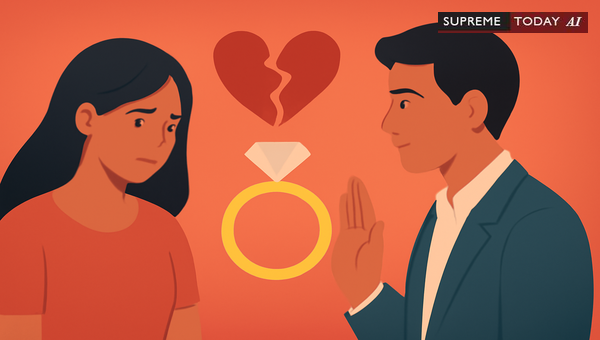
to Marry Under BNS Act: Key Legal Insights
In the realm of personal relationships, a promise to marry can carry significant emotional weight, but what happens when it's broken? Many individuals wonder about the provision for promise to marry and failure under BNS Act. This question often arises in cases involving allegations of deception, consent in sexual relations, and potential criminal liability. While the , which replaces the , maintains similar principles, courts continue to rely on established precedents emphasizing intent and good faith. 2023 0 Supreme(MP) 636
This blog post delves into the legal nuances, distinguishing between a mere and a , and explores how such promises impact consent under criminal law. Note: This is general information based on judicial interpretations and not specific legal advice. Consult a qualified lawyer for personalized guidance.
Understanding Promise to Marry in Criminal Law
A promise to marry becomes legally contentious when linked to sexual relations. Under (now mirrored in BNS), consent obtained through deception or () can vitiate consent, potentially amounting to rape. However, not every unfulfilled promise triggers criminal liability.
Courts stress the . If made in good faith but later unfulfilled due to circumstances like family pressure, it typically constitutes a civil matter rather than a crime. 2021 0 Supreme(Guj) 6
Key Distinction: False Promise vs.
- : Made dishonestly from the outset, solely to induce sexual relations, with no intent to fulfill. This deceives the woman, vitiating consent. 2023 0 Supreme(Gau) 521
- : Genuine at inception but fails due to external factors. No criminal intent, hence no offence under BNS/IPC Sections akin to 375 or 417 (cheating). 2021 0 Supreme(Raj) 55
As observed in judicial precedents, It seems to be a case of to marry rather than a case of . 2023 0 Supreme(Gau) 521 2019 1 Supreme 140
Legal Framework: Consent and
defines consent vitiated by if the promise materially influences the woman's decision. For liability:
- Promise must be false and in bad faith.
- Directly linked to sexual consent.
- Proven fraudulent intent via evidence, not just subsequent failure. 2022 0 Supreme(Ker) 169
Non-disclosure of material facts, like known marriage obstacles, can also vitiate consent: If he was not certain about the marriage, he is bound to disclose that fact to the woman. 2022 0 Supreme(Ker) 169
Under BNS, these principles persist, focusing on (act) and (intent) in sexual autonomy violations.
Landmark Judicial Precedents
Indian courts have clarified these issues through key cases:
- : Distinguished false promises requiring active and reasoned deliberation from mere breaches. 2023 0 Supreme(MP) 636
- : False promise must show no intention to fulfill at the time made. 2021 0 Supreme(Guj) 6
- : Consent vitiated only without genuine intent; external circumstances excuse non-fulfillment. 2023 0 Supreme(Del) 4834
Additional insights from sources:
- In a case under , prosecution failed to prove initial lack of intent, leading to acquittal: Prosecution has failed to prove beyond a reasonable doubt that from very inception, accused had no intention to marry. 2023 0 Supreme(Gau) 521
- Family pressure often tips cases toward breach: the accused became ready to marry her but his father and others took him away. 2021 0 Supreme(Raj) 55 2019 0 Supreme(J&K) 401
- Long-term consensual relationships (e.g., 12 years) rarely qualify as rape absent deceit. 2021 0 Supreme(Raj) 55
Courts quash FIRs misusing criminal process for personal disputes under . 2019 1 Supreme 140
Evidence and Prosecution Challenges
Proving fraudulent intent demands concrete evidence:- Communications showing deceit.- Witness testimonies on initial intent.- Timeline inconsistencies.
Mere allegations post-breakup suffice not; benefit of doubt goes to accused if unproven. In one appeal, Prosecutrix has failed to prove beyond reasonable doubt that petitioner is guilty of offence of cheating. 2023 0 Supreme(Gau) 521
Documentary proof strengthens claims, but vague oral promises rarely lead to conviction.
: no action shall lie for the recovery of damages for of marriage, unless such promise of marriage shall have been made in writing.
Application to Real-Life Scenarios
Consider a relationship where marriage is promised sincerely, but family opposition intervenes. Courts view this as breach, not deception. 2023 0 Supreme(Gau) 521
Conversely, repeated seduction under marriage pretext without intent triggers . However, mature parties (e.g., 40-year-old prosecutrix allowing overnight stays) may imply knowing consent, not misconception. 2019 0 Supreme(J&K) 401
Under BNS, emphasis remains on : Sex on promise to marry can be established as rape only if... the accused has violated the of the victim. 2022 0 Supreme(Ker) 169
Preventing Misuse of Law
Courts caution against abusing rape/cheating provisions for revenge. Quashing proceedings protects genuine relationships: the acknowledged consensual physical relationship between the parties would not constitute an offence under Section 376. 2019 1 Supreme 140
Conclusion and Key Takeaways
The provision for promise to marry and failure under BNS Act hinges on intent. Generally:- Good faith promises, even unfulfilled, avoid criminality.- False promises with deceitful intent may vitiate consent, attracting liability.- Evidence is crucial; courts favor quashing unsubstantiated claims.
Key takeaways:- Distinguish false promise from breach early.- Document intentions clearly.- Seek mediation for disputes before litigation.
This analysis draws from precedents as of . Laws evolve; recent BNS amendments and judgments may apply. Always consult legal experts. 2015 0 Supreme(Gau) 418
References:- Deepak Gulati vs. State of Haryana 2023 0 Supreme(MP) 636- Pramod Suryabhan Pawar vs. State of Maharashtra 2021 0 Supreme(Guj) 6- Other cases: 2023 0 Supreme(Del) 4834, 2015 0 Supreme(Gau) 418,
, 2023 0 Supreme(Gau) 521, 2022 0 Supreme(Ker) 169, 2021 0 Supreme(Raj) 55, 2019 0 Supreme(J&K) 401, 2019 1 Supreme 140
Stay informed, communicate openly, and prioritize mutual respect in relationships.
#PromiseToMarry #BreachOfPromise #BNSAct















