


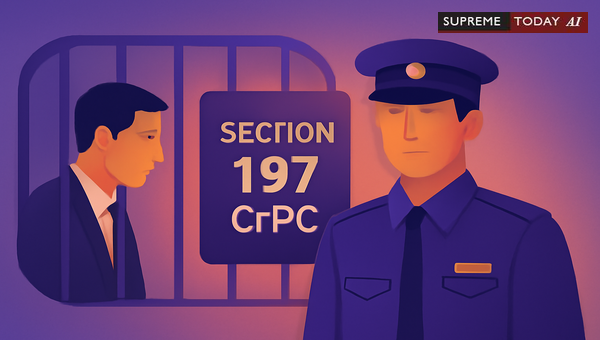
Can Govt Officers Be Jailed for Disobeying Orders in India?
In the complex world of Indian bureaucracy, questions about accountability often arise. A common query from citizens and officials alike is: Kya Government Officer Ko Vyadesh Ka Palan Na Karne Per Jail Bheja Ja Sakta Hai? Translated, this means, Can a government officer be sent to jail for not complying with an order?
This issue touches on the balance between holding public servants accountable and protecting them from . Drawing from key legal provisions like and , we'll break it down step by step. This post provides general insights based on —not specific legal advice. Always consult a qualified lawyer for your situation.
Main Legal Finding
A government officer cannot be prosecuted or sent to jail solely for disobedience of an order unless the act of disobedience is connected with and falls within the scope of official responsibilities, as protected under Section 197 CrPC.2022 0 Supreme(Del) 674 2024 0 Supreme(Raj) 672
In essence, protection is granted for acts done in the discharge of , but this shield has limits. Disobedience outside official scope can lead to jail time.
Key Points on Disobedience and Protection
- Punishable under IPC Section 188: Disobedience to a lawful public servant order is criminal if it causes obstruction, annoyance, injury, or danger. Key elements: lawful order, knowledge of it, and harmful disobedience. 2023 0 Supreme(P&H) 1192
- Section 197 CrPC Shield: Applies when the act is reasonably connected to official duties. No prior sanction? Prosecution can be quashed. 2022 0 Supreme(Del) 674 2024 0 Supreme(Raj) 672
- Test: Must be in discharge or purported discharge of duty. Reasonable connection is key. 2024 0 Supreme(Raj) 672
- Not Absolute Protection: Excess of duty but connected? May still protect. Wholly outside? Jail possible. 2024 0 Supreme(Raj) 672
- Court Powers: Proceedings quashed sans sanction if linked. 2024 0 Supreme(Raj) 672
Detailed Analysis: Disobedience Under IPC Section 188
Section 188 IPC targets disobedience to orders duly promulgated by a public servant. It requires:- A lawful order.- Offender's knowledge.- Intentional disobedience.- Resulting harm to persons or property. 2023 0 Supreme(P&H) 1192
For government officers, this intersects with their duties. Simple non-compliance isn't enough—there must be legal violation.
Protection Under Section 197 CrPC
This provision safeguards public officers from prosecution for acts done in the discharge of official duties or under official authority's color. The emphasizes a between the act and duty. 2022 0 Supreme(Del) 674 2024 0 Supreme(Raj) 672
Example from Precedents: If an officer disobeys in purported official exercise, sanction needed. Courts quash FIRs without it. 2024 0 Supreme(Raj) 672
Acts Within vs. Outside Official Scope
- Protected Acts: Directly tied to duties, e.g., enforcement decisions. Protection holds even if erroneous, if connected. 2024 0 Supreme(Raj) 672
- Unprotected Acts: Personal motives, malice, or wholly extraneous—prosecution and jail viable. Fabricating documents maliciously? No shield. 1909 0 Supreme(Mad) 186
Judicial stance: Protection only for official-linked acts. 2024 0 Supreme(Raj) 672
Integrating Broader Accountability Contexts
Beyond core provisions, real-world scenarios highlight enforcement. RTI queries often probe officer compliance, as in cases seeking lists of monitored sankarkmito (corrupt individuals) or debarred candidates. Non-response or misconduct can escalate to legal action. 2022 Supreme(Online)(CIC) 11653 2024 Supreme(Online)(CIC) 4781
For instance, administrative records stress voluntary statements: HANJI SIR THEEK HAI AUR RECORD KARNE SE PAHLE, MAIN APKO AHA BATANA CHAHATA HU KI AYE APKI APNI MARJI HAI KI AAP APNA BAYAN DENA CHAHATE HAI YE NAHI DENA CHAHATE HAI, KOI BHI ADMI APKO FORCE NAHI KAR SAKTA. 2023 Supreme(Online)(All) 24518 This underscores no-force principles, but willful duty neglect invites consequences. 2023 Supreme(Online)(ALL) 13941
docs note procedural lapses, like unforwarded letters, potentially leading to accountability probes.
- Allahabad
In probation contexts: Uperyukt Tathyeo Ke Aadhar Per Kaha Ja Sakta Hai Ki Pita Dwara Niyantran Na Rakh Pane... shows family/official control failures under scrutiny. 2018 0 Supreme(All) 1606
These snippets reveal: While protected, officers face jail for unlawful disobedience, especially sans nexus.
and Real Applications
rulings reinforce: Sanction mandatory for official acts. No connection? Proceed to trial, possible imprisonment. 2024 0 Supreme(Raj) 672
Conversely, quashing common if protected. E.g., policy or order disputes in duty scope—shield applies.
Note on 'Vyadesh': Interpreted as 'aadesh' (order), not foreign policy. Policy non-adherence rarely jails unless statutory breach.
Exceptions and Limitations
- Excess but Connected: Protection possible. 2024 0 Supreme(Raj) 672
- No Sanction, Official Act: Quash proceedings. 2024 0 Supreme(Raj) 672
- RTI/Administrative: Non-compliance may trigger probes, but jail needs criminality. 2024 Supreme(Online)(CIC) 4781
Recommendations for Officers and Citizens
- For Officers: Verify order's official link before acting. Seek legal opinion on sanction needs.
- For Complainants: Prove no official nexus for direct prosecution.
- Courts: Scrutinize duty scope pre-jail.
Ensure Section 197 compliance to avoid reversals.
Conclusion and Key Takeaways
Government officers enjoy robust protection under Section 197 CrPC for official-duty disobedience, but not blanket immunity. Jail hinges on no reasonable official connection—then IPC 188 bites. 2023 0 Supreme(P&H) 1192 2024 0 Supreme(Raj) 672
Takeaways:- Protected: Official scope—needs sanction.- Vulnerable: Personal/excess acts—jail risk.- Seek Advice: Laws evolve; precedents guide.
This analysis draws from precedents like 2022 0 Supreme(Del) 674, 2024 0 Supreme(Raj) 672, 2023 0 Supreme(P&H) 1192. For tailored guidance, contact a legal expert.
References
- 2024 0 Supreme(Raj) 672: / on Section 197 and disobedience.
- 2023 0 Supreme(P&H) 1192: IPC 188 application.
- 2022 0 Supreme(Del) 674: protection principles.
- Additional: 2022 Supreme(Online)(CIC) 11653, 2023 Supreme(Online)(ALL) 13941, etc., for context.












