


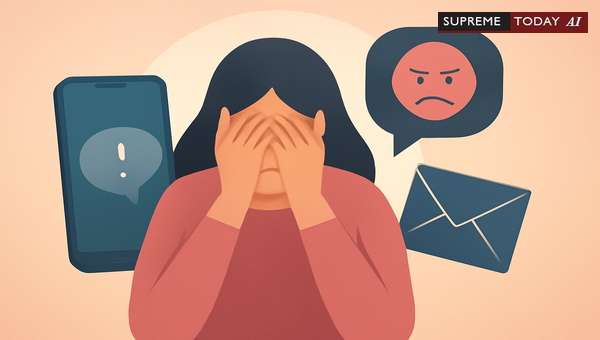
IPC Section 509: Does Messaging and Disturbing a Girl Constitute an Offence?
In today's digital age, where communication happens instantly via messages, a common concern arises: if a person messages a girl and disturbs her, which section of law applies? This question, often phrased in everyday language as message karke disturb kiya to konsa section lega, highlights the intersection of technology and criminal law in India. While casual messaging might seem harmless, certain actions can cross into criminal territory, potentially invoking provisions like .
This blog post breaks down the legal implications, drawing from key statutes, case laws, and precedents. Please note: This is general information and not specific legal advice. Consult a qualified lawyer for your situation.
Main Legal Finding
Messaging a girl and disturbing her may attract criminal liability under Section 509 IPC, depending on the nature, content, and intent of the messages. This section targets acts that insult the modesty of a woman or intrude upon her through words, gestures, sounds, or objects intended to be heard or seen by her. 2012 8 Supreme 289
However, not every message qualifies as an offence. Mere contact without insulting or harassing elements typically does not suffice. The prosecution must prove .
Key Elements of Section 509 IPC
- Intent: The act must aim to insult the woman's modesty.
- Medium: Words (including messages), sounds, gestures, or objects.
- Target: Intended for the woman to hear/see.
- Impact: Capable of shocking her sense of decency. 2012 8 Supreme 289
For instance, , lewd, or repeated unwanted messages could qualify, but friendly chats generally would not.
Detailed Analysis of Messaging as Harassment
What Constitutes 'Disturbing' Under the Law?
Disturbing a girl via messages often hinges on whether it intrudes on or insults modesty. In 2022 0 Supreme(Ker) 113, a case involving WhatsApp content was deemed potential , but courts stress evidence of insult or harassment. Mere annoyance without content may not trigger Section 509.
Related precedents show escalation:- In 2022 0 Supreme(Cal) 758, an appellant repeatedly disturbed a 13-year-old girl, leading to severe consequences like an acid attack conviction under . The victim's mother testified about prior harassment, underscoring how persistent disturbance can build a case.- 2018 0 Supreme(Bom) 1032 involved sending psychologically disturbing messages, including a photo of a hanging, to harass mentally—highlighting how content intent matters.
Broader Application to Digital Messages
Electronic communication amplifies risks. Cases like 2013 0 Supreme(AP) 1018 and 2015 2 Supreme 513 discuss messages under (though struck down in , similar principles apply via other sections like 66E for violation or 67 for obscene material). Sending grossly or messages intended to annoy can lead to charges. 2013 0 Supreme(AP) 1018
In
SIKANDER vs STATE
, messages sent to disturb someone in a sensitive area were seen as an affirmative attempt to harass, reinforcing intent's role.Other Relevant Legal Provisions
If messaging escalates:- : Applies to assault or criminal force outraging modesty, including physical gestures. 2006 7 Supreme 741- IT Act Sections: For cyber elements, like Section 66A equivalents post- (e.g., 67A for sexually explicit material) or if minor involved.- : In marital contexts, repeated messages causing mental harassment. 2018 0 Supreme(Bom) 1032
In
VISHAL PRATAP SINGH vs THE STATE OF JHARKHAND
, a court ordered a petitioner not to disturb or annoy a major girl victim, showing protective orders in consensual cases turning sour.Exceptions and Limitations
- No offence if no intent to insult or content.
- Simple disturbance might invoke general harassment laws or consumer protections against spam (e.g.,
CELLULAR OPERATORS ASSOCIATION OF INDIA VS NIVEDITA SHARMA
, where intrusive bill messages caused inconvenience). - Facts like frequency, content, and victim impact are crucial. 1997 8 Supreme 129
Courts require proof: The prosecution must establish that the act was with the intent to insult or intrude upon the modesty of a woman, and that the words or gestures were intended to be heard or seen by her. 1997 8 Supreme 129
Legal Precedents and Case Insights
- 2012 8 Supreme 289: Core explanation—Section 509 punishes utterances or gestures intending to insult modesty.
- 2013 0 Supreme(AP) 1018 & 2013 0 Supreme(Bom) 1480: electronic messages punishable if or .
- 2022 0 Supreme(Ker) 113: WhatsApp nuisance needs proven insult.
From other contexts, 2022 0 Supreme(Cal) 758 illustrates how unchecked disturbance leads to graver crimes, with witness testimonies sealing guilt.
Recommendations for Victims and Accused
For Victims:- Document messages (screenshots, timestamps).- File FIR under relevant sections; cyber cells handle digital cases.- Seek protection orders.
VISHAL PRATAP SINGH vs THE STATE OF JHARKHAND
General Advice:- Respect ; avoid unsolicited contacts.- If accused, gather evidence showing no malicious intent. 1997 8 Supreme 129
Prosecution Tips:- Prove intent and impact. Mere messaging insufficient. 2012 8 Supreme 289
Conclusion and Key Takeaways
Messaging a girl and disturbing her typically falls under Section 509 IPC if intent to insult modesty is proven, but other laws like IPC 354 or IT Act may apply based on facts. Always prioritize consent and respect in communications—digital trails are permanent.
Key Takeaways:- Intent is king: No insult, no Section 509.- Digital harassment? IT Act + IPC combo.- Evidence matters: Screenshots, witnesses crucial. 2022 0 Supreme(Ker) 113- Consult professionals; laws evolve.
Disclaimer: This overview draws from precedents like 2012 8 Supreme 289, 2013 0 Supreme(AP) 1018, but outcomes vary. Seek legal counsel for personalized guidance.
References:1. 2012 8 Supreme 289: Section 509 IPC details.2. 2022 0 Supreme(Ker) 113: WhatsApp nuisance.3. 2013 0 Supreme(AP) 1018: messages.4. 2006 7 Supreme 741: .5. 1997 8 Supreme 129: Prosecution burden.6. 2022 0 Supreme(Cal) 758: Disturbance history.7. 2018 0 Supreme(Bom) 1032: Psychological harassment.
Stay informed, stay safe.
#IPC509 #WomenHarassment #CyberCrimeIndia















