Searching Case Laws & Precedent on Legal Query.....!
Analysing the retrieved Case Laws
Scanned Judgements…!



Searching Case Laws & Precedent on Legal Query.....!
Analysing the retrieved Case Laws
Scanned Judgements…!
Essential ingredients of Khula - Acceptance by the husband is a crucial element for the validity of Khula, which is considered a no-fault divorce initiated by the wife. The husband's acceptance or consent is necessary for the divorce to be legally effective, although his consent is not a precondition for its validity ["2022 Supreme(Online)(KER) 46781"], ["2022 Supreme(Online)(KER) 50494"]. Additionally, the process of Khula involves the wife offering a consideration (such as payment or compensation) to the husband for her release from marriage, emphasizing mutual agreement and consent ["1996 0 Supreme(Bom) 53"].
Procedure and legal considerations - Approaching a Mufti or obtaining a Fatwa for Khula is not mandatory and does not reinforce its legal enforceability in court. The invocation of Khula without reconciliation attempts, as mandated by Quranic stipulations, would be considered invalid ["2025 0 Supreme(Telangana) 67"]. The law recognizes extrajudicial Khula as complete when the parties have mutually agreed, and the marriage is dissolved in accordance with Muslim Personal Law. Challenging the effectiveness of Khula is permissible in appropriate legal forums, and courts do not require detailed inquiries to endorse extrajudicial divorces ["2026 Supreme(Online)(Mad) 7168"], ["2025 0 Supreme(Ker) 3022"], ["2024 Supreme(Online)(KER) 9495"].
Validity and formalities - The actual date of Khula, payment of Mehr (dower), and specific conditions like Iddat (waiting period) are important but not always explicitly documented in agreements. The law does not consider registration or written agreements as essential for the validity of Khula; the focus remains on the mutual consent and compliance with Islamic principles ["2025 0 Supreme(Ker) 3022"], ["2012 0 Supreme(Mad) 4208"]. Under Sunni law, witnesses are not necessary, but under Shia law, offer and acceptance must be made in the presence of two competent witnesses, and Khula can be revocable during Iddat ["2021 Supreme(Online)(KER) 27876"], ["2021 Supreme(Online)(KER) 23732"].
Reconciliation and fairness - Quranic directives on reconciliation apply to Khula, and invoking Khula without attempts at reconciliation is viewed as legally invalid. The courts emphasize that Khula is a no-fault divorce, but fairness dictates that attempts at reconciliation should precede its invocation ["2025 Supreme(Online)(Tel) 14005"], ["2025 Supreme(Online)(Tel) 51293"].
Distinction from Mubarat - Khula involves the wife seeking dissolution by offering consideration, whereas Mubarat is a mutual release from marriage, often treated as irrevocable but with similar procedural requirements such as observing Iddat ["2025 0 Supreme(Guj) 1304"], ["
Asif Daudbhai Karva VS None - Current Civil Cases (2025)
"]. Both forms are recognized under Muslim law, with their distinctions based on mutual agreement versus unilateral request ["2021 Supreme(Online)(KER) 27876"].Analysis and ConclusionThe essential ingredients in Khula law include mutual consent, the wife's offer of consideration, and adherence to Islamic procedural principles. The husband's acceptance or consent, while important, is not always mandatory for validity, but reconciliation attempts are advisable. Formal registration is not required, and courts uphold extrajudicial Khula as valid when these criteria are met. Challenges to Khula's effectiveness are permissible in legal forums, emphasizing the importance of lawful procedures and fairness in the process ["2025 0 Supreme(Telangana) 67"], ["2026 Supreme(Online)(Mad) 7168"], ["2025 0 Supreme(Ker) 3022"].
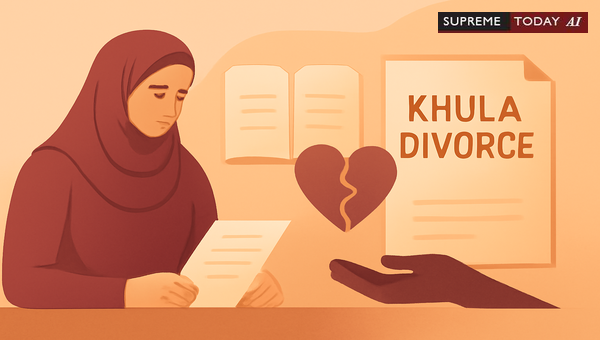
In the realm of Muslim Personal Law in India, divorce options like provide women with a pathway to end unhappy marriages. But what exactly makes a valid? If you're searching for the essential ingredients in law, this post breaks it down based on established legal precedents. , derived from Islamic principles, empowers the wife to initiate dissolution by offering compensation, typically relinquishing her (dower). Understanding these elements is crucial for couples navigating marital breakdowns, though this is general information and not specific legal advice—consult a qualified lawyer for your situation.
(also spelled Khul') is a form of divorce where the wife proposes the dissolution to her husband, often in exchange for returning the or other consideration. Unlike (husband-initiated), emphasizes the wife's agency. Courts have consistently upheld it as an , effective upon mutual agreement, without needing prior judicial intervention. 2014 0 Supreme(SC) 984
This right remains absolute, even post the , which consolidates but does not negate extra-judicial remedies like . 2021 0 Supreme(Ker) 452 As one ruling notes, the right to invoke by Muslim women is absolute and remains intact despite provisions in the Dissolution of Muslim Marriages Act. 2021 0 Supreme(Ker) 452
For to be legally binding, several key ingredients must align. These are drawn from judicial interpretations under , and related cases. 2014 0 Supreme(SC) 984
The process begins with the wife's voluntary proposal. She must freely express her desire for divorce, without coercion or duress. This is the foundational step: is a divorce initiated by the wife, requiring her to propose... 2014 0 Supreme(SC) 984
Courts stress voluntariness to prevent abuse. If proven coerced, the may be invalidated. From supporting precedents, detailed enquiries into voluntariness are not always essential in endorsement proceedings, but challenges remain open for aggrieved parties. 2024 Supreme(Online)(Ker) 75228 If any person want to contest the effectiveness of ... it is open for such aggrieved person to contest the same in appropriate manner known under law. 2024 Supreme(Online)(Ker) 75228
The husband's acceptance is pivotal. Once he agrees—explicitly or by conduct—the divorce takes effect immediately as an irrevocable divorce (-i-Bain). The divorce becomes effective once the husband accepts the wife’s proposal; the operation is generally considered irrevocable (talak-i-bain) upon acceptance. 2014 0 Supreme(SC) 984
Notably, husband's consent is not a precondition for 's validity in all views, but acceptance seals it. Hadiths guide fairness, directing compensation, yet the wife's right stands firm. 2021 0 Supreme(Ker) 452 Husband’s consent is not a precondition for essential validity of . 2021 0 Supreme(Ker) 452
The wife typically offers consideration, like forgoing her claim. However, this is not mandatory: The proposal by the wife may or may not be accompanied by an offer to relinquish her claim to , but such relinquishment is not a precondition. 2014 0 Supreme(SC) 984
This flexibility ensures accessibility, rooted in Shariah's ethical framework. Quran and Hadith inform these rules, prioritizing justice. 2021 0 Supreme(Ker) 452
operates extrajudicially: The unilateral extrajudicial divorce under Muslim Personal law is complete when either of the spouse pronounce/declare , -e-tafweez or ... in accordance with Muslim Personal Law. 2021 0 Supreme(Ker) 806
Upon acceptance, it's irrevocable, dissolving the marriage instantly. No waiting period or reconciliation is inherently required beyond Islamic norms. Courts confirm: effective from acceptance, akin to -i-Bain. 2014 0 Supreme(SC) 984
While primarily outside courts, under Section 7(d) of the Act, 1984, can endorse to declare marital status. Their role is limited: verify essentials like voluntariness and validity. Hence, detailed enquiry is neither essential nor desirable in a proceeding initiated by either of the parties to endorse an extrajudicial divorce... 2024 0 Supreme(All) 2109 2024 Supreme(Online)(Ker) 75228
If satisfied, courts endorse without delay: Court is satisfied that there was valid pronouncement of //-e-tafweez, it shall endorse same and declare status of parties. 2021 0 Supreme(Ker) 806
Endorsements are subject to challenges: If any of the parties want to challenge the extrajudicial divorce by , ... he/she is free to challenge the same in accordance with law. 2024 0 Supreme(All) 2109
Courts avoid deep probes in endorsements but uphold scrutiny in disputes. This balances efficiency with justice. 2021 0 Supreme(Ker) 806
To minimize disputes:- Document Everything: Record proposal, acceptance, and consideration in writing.- Explicit Terms: Clearly state relinquishment or alternatives.- Seek Endorsement: Approach Family Court for formal declaration post-agreement.- Legal Guidance: Lawyers ensure compliance; note 's irrevocability once effected.
Parties should ensure that proposals and acceptances are clearly documented, preferably in writing. 2014 0 Supreme(SC) 984
offers Muslim women a vital, wife-led divorce route under Indian law, hinging on voluntary proposal, husband's acceptance, and consideration. It's typically extrajudicial, irrevocable upon completion, with courts aiding formalities. Precedents affirm its robustness, independent of judicial fiat if essentials met. 2024 0 Supreme(All) 2109
Remember, laws evolve, and cases vary. This overview draws from cited judgments for educational purposes—always consult professionals for personalized advice. For more on Muslim family law, explore our resources.
References:- 2014 0 Supreme(SC) 984: Core on ingredients, proposal, acceptance.- 2024 0 Supreme(All) 2109, 2024 0 Supreme(All) 1640,
: Judicial endorsement.- 2021 0 Supreme(Ker) 806, 2024 Supreme(Online)(Ker) 75228, 2021 0 Supreme(Ker) 452: Extrajudicial nature, absolute right. #KhulaDivorce, #MuslimFamilyLaw, #IslamicDivorce


On the other hand, the wife’s argument in the Review Petition was that Khula is a form of divorce where the acceptance of the husband to the demand for Khula constituted an essential element. ... Khula is also been defined in several textbooks on Mohammedan law including Muhammadan Law, Vol.II by Mr. Syed Ameer Ali; Muslim Law of Marriage, Divorce and Maintenance by Mr. M.A. Qureshi; Mullas Principles of Mahommedan Law, 19th ed., by Mr. Hidayatullah ....

The respondent/ husband filed written statement and denied the validity of Khula dated 14.10.2019. It was the specific case of the respondent that he signed the Khula papers on 14.10.2019 unwillingly and he did not want to end the relationship with the petitioner by way of Khula. ... A perusal of the written statement would indicate that the respondent in his pleadings has stated that he signed the Khula papers on 14.10.2019 unwillingly and he did not want to end the relationship with his wife by way of Khula#H....

If any person want to contest the effectiveness of khula or talaq, it is open for such aggrieved person to contest the same in appropriate manner known under law. ... If any of the parties want to challenge the extrajudicial divorce by talaq, khula, mubaarat or talaq - e - tafweez mode, he / she is free to challenge the same in accordance with law in appropriate forum. ... Hence, detailed enquiry is neither essential nor desirable in a proceeding initiated by either of the parties to endorse an extrajud....

If the petitioner is in any way aggrieved, he may challenge the declaration of Khula in accordance with law. This petition is disposed of. ... If any person want to contest the effectiveness of khula or talaq, it is open for such aggrieved person to contest the same in appropriate manner known under law. ... Hence, detailed enquiry is neither essential nor desirable in a proceeding initiated by either of the parties to endorse an extrajudicial divorce and to declare the marital status. ... If any person....

The unilateral extrajudicial divorce under Muslim Personal law is complete when either of the spouse pronounce/declare talaq, talaq-e-tafweez or khula, as the case may be, in accordance with Muslim Personal Law. ... If any of the parties want to challenge the extrajudicial divorce by talaq, khula, mubaarat or talaq-e-tafweez mode, he/she is free to challenge the same in accordance with law in appropriate forum. ... Hence, detailed enquiry is neither essential nor desirable in a proceed....

However, such registration is not an essential to the personal law. Similarly, the Court does not find that recording of an agreement between the parties to the Nikah in any written format is essential for recording the fact of dissolution of marriage. ... law. ... Learned AGP has therefore taken this Court through processes by which dissolution of muslim marriage is recognized by Personal Law specifically emphasizing on ‘khula’ and ‘mubaraat’. ... Under the Muslim law#HL_END....

However, such registration is not an essential to the personal law. Similarly, the Court does not find that recording of an agreement between the parties to the Nikah in any written format is essential for recording the fact of dissolution of marriage. ... Learned AGP has therefore taken this Court through processes by which dissolution of muslim marriage is recognized by Personal Law specifically emphasizing on ‘khula’ and ‘mubaraat’. ... personal law. ... Under the Shiah La....
Husband’s consent is not a precondition for essential validity of khula. Hadith of the prophet in such circumstances, directing the wife to return or pay compensation to the husband has to be understood to ensure fairness of justice. ... Shariah primarily and predominantly relates to ethical values essential for both worlds. Quran by itself did not promote straight forward code of law. Many legal rules become part of Shariah from the life and sayings of the last Prophet Muhammad (This is called Hadith). ... Tahir Mahmood....

On the other hand, the wife’s argument in the Review Petition was that Khula is a form of divorce where the acceptance of the husband to the demand for Khula constituted an essential element. ... Khula is also been defined in several textbooks on Mohammedan law including Muhammadan Law, Vol.II by Mr. Syed Ameer Ali; Muslim Law of Marriage, Divorce and Maintenance by Mr. M.A. Qureshi; Mullas Principles of Mahommedan Law, 19th ed., by Mr. Hidayatullah ....
Shariah primarily and predominantly relates to ethical values essential for both worlds. Quran by itself did not promote straight forward code of law. Many legal rules become part of Shariah from the life and sayings of the last Prophet Muhammad (This is called Hadith). ... Under Sunni law the presence of witnesses is not necessary. But under Shia law, the offer and acceptance of Khula must be made in the presence of two competent witnesses. Further, under Shia law th....

The essential ingredients to constitute an offence under Section 409 of the Indian Penal Code has already been noted above.

That the accused promoted or attempted to promote feelings of enmity and hatred between different religious, racial or language groups or caste or communities or that the accused has done an act which is prejudicial to the maintenance of harmony between such groups or caste or communities and which is likely to disturb public tranquillity. The essential ingredients of the aforesaid provision of law are:

That the accused promoted or attempted to promote feelings of enmity and hatred between different religious, racial or language groups or caste or communities or that the accused has done an act which is prejudicial to the maintenance of harmony between such groups or caste or communities and which is likely to disturb public tranquillity. The essential ingredients of the aforesaid provision of law are:

Material facts are lacking and, consequently, the Court finds that no cause of action arises on this issue. In the instant case, such ingredients are missing in the election petition. In the light of the aforesaid, in order to constitute corrupt practice, it must be shown that the act was done during the election campaign between the date when the respondent became a candidate and the date of poll and that it was the act of the respondent or her agent or any other person with her consent to appeal to vote on the ground of her religion. Such ingredients are essential and are require....

The same would be considerably eroded and suffer a serious set back if this Court were readily to declare that a earlier judgment of this Court is vitiated by fraud, collusion or misrepresentation. 33. Certainty and continuity are essential ingredients of rule of Law. But the same ought to be done only when substantial and compelling reasons are shown and established by a strong foundation.


An indispensable Tool for Legal Professionals, Endorsed by Various High Court and Judicial Officers
Please visit our Training & Support
Center or Contact Us for assistance

Scan Me!
India’s Legal research and Law Firm App, Download now!


For Daily Legal Updates, Join us on :



 Back to top


