Searching Case Laws & Precedent on Legal Query.....!
Analysing the retrieved Case Laws
Scanned Judgements…!



Searching Case Laws & Precedent on Legal Query.....!
Analysing the retrieved Case Laws
Scanned Judgements…!
Probationary Employee Discharge Without Stigma - Employers may discharge employees on probation without holding an inquiry, provided the termination is not punitive or stigmatic. Such dismissals are generally considered non-punitive and do not deprive the employee of rights or cast a stigma, especially if the termination is based on performance or suitability assessments rather than misconduct ["2023 0 Supreme(Bom) 1241"] ["2025 0 Supreme(Bom) 887"] ["2025 0 Supreme(Ori) 114"].
Inquiry and Punitive Action - When an inquiry is conducted into misconduct during probation and the termination is based on findings of misconduct, the order may be considered punitive and stigmatic, potentially amounting to punishment. The purpose of such inquiries is crucial; if held to assess misconduct, the termination could carry a stigma, whereas assessments of general suitability typically do not ["2023 0 Supreme(Bom) 1241"] ["2025 0 Supreme(Cal) 872"] ["2023 0 Supreme(Raj) 505"].
Stigma and Its Legal Implication - Orders that explicitly or implicitly imply misconduct or misconduct findings can be stigmatic, affecting the employee’s reputation and future prospects. Conversely, simple assessments of suitability or performance, without allegations of misconduct, generally do not constitute punishment or stigma ["2023 0 Supreme(Raj) 505"] ["2023 0 Supreme(Raj) 486"] ["2024 0 Supreme(Del) 795"].
Preliminary vs. Departmental Inquiry - A preliminary inquiry aimed at establishing whether there are grounds for further action is not considered punitive or stigmatic. Full departmental inquiries, especially those involving misconduct, are more likely to be viewed as punitive if they lead to termination based on misconduct findings ["2023 0 Supreme(Bom) 1241"] ["2006 0 Supreme(Mad) 3190"] ["2001 0 Supreme(Raj) 1438"].
Legal Standards for Termination During Probation - Courts recognize that probation is a period of testing, and employees can be discharged without inquiry if the reason is performance-based and not stigmatic. However, if misconduct is involved, a proper inquiry is necessary to avoid the order being deemed punitive ["2025 0 Supreme(Bom) 887"] ["2025 0 Supreme(Ori) 114"] ["1999 2 Supreme 34"].
Role of Inquiry in Protecting Employee Rights - Proper conduct of inquiry, opportunity for hearing, and clear communication of charges are essential to prevent orders from being considered punitive. Lack of inquiry when misconduct is alleged can lead to judicial interference, especially if the order is stigmatic ["2001 8 Supreme 409"] ["2006 0 Supreme(Mad) 3190"] ["2025 0 Supreme(Kar) 2744"].
Analysis and Conclusion:Employees on probation can be discharged without inquiry if the termination is purely based on suitability or performance, and not misconduct, thus avoiding stigma. If misconduct or allegations of misconduct are involved, a proper inquiry must be conducted; otherwise, the order risks being viewed as punitive and stigmatic, which can be challenged legally. Courts emphasize the importance of distinguishing between non-punitive assessments and punitive dismissals involving misconduct. The key factor is whether the order explicitly or implicitly attributes misconduct that could damage the employee’s reputation; if so, a formal inquiry is necessary to safeguard the employee’s rights ["2023 0 Supreme(Bom) 1241"] ["2025 0 Supreme(Bom) 887"] ["2023 0 Supreme(Raj) 505"].
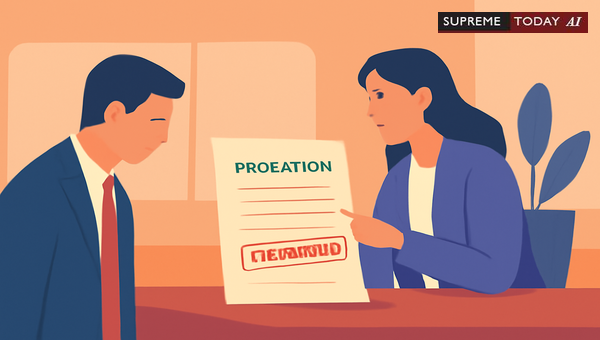
Terminating an employee during their probation period is a common practice for employers in India, but it can quickly become legally complex. A frequent question arises: Does an employee on probation stigma inquiry require a formal process? In other words, can you simply end a 's services for poor performance, or does it cross into stigmatic territory—implying —that demands a full inquiry under principles of ?
This blog post breaks down Indian court interpretations, drawing from key judgments. We'll explore when termination is non-stigmatic (no inquiry needed) versus stigmatic (inquiry required), with practical insights for employers and employees. Note: This is general information based on case law and not specific legal advice. Consult a lawyer for your situation.
In Indian employment law, probationers can generally be terminated without a formal inquiry if it's based on or suitability. Courts view this as a simple assessment of fit, not punishment. However, if the termination order casts a stigma—explicitly or implicitly alleging —it may be deemed , requiring adherence to , including a hearing. 2025 0 Supreme(SC) 421 2012 8 Supreme 321 2006 3 Supreme 478
The key test? The language of the termination order and surrounding circumstances. As held in several cases, mere statements like unsatisfactory work or not suitable are typically non-stigmatic. But phrases imputing , such as tied to allegations, or references to inquiry reports mentioning wrongdoing, can trigger scrutiny. 1999 2 Supreme 34 2001 3 Supreme 503 2021 0 Supreme(SC) 1187
Courts consistently rule that ending probation for poor performance doesn't need an inquiry. For instance:- If the order states the employee's work was unsatisfactory, without references, it's non-stigmatic. 2006 3 Supreme 478 1986 0 Supreme(SC) 13- Employers can assess probation objectively, as in guidelines noting: Performance of an employee appointed on probation shall be objectively assessed by the Head during the period of his probation. 2026 Supreme(Online)(Bom) 302
In one case, a teacher's services were terminated during a two-year probation for unsatisfactory work. The order lacked any stigmatic phrases, simply noting the management reviewed records and found performance lacking—no mentioned. The court upheld it, emphasizing: The question as to whether any order is stigmatic has to be decided on the basis of the contents of the order. 2007 0 Supreme(Bom) 343
Similarly, a peon's probation was ended for unsatisfactory work and unauthorized absences. The court ruled this non-stigmatic, citing precedents like Pavanendra Narayan Verma v. Sanjay Gandhi PGI (2002), which clarifies unsatisfactory conduct during probation doesn't equate to stigma. 2004 0 Supreme(Pat) 1003
Key takeaway: Stick to neutral language like services not found satisfactory during probation. Asking for an explanation that's deemed unsatisfactory doesn't stigma the order. 2002 0 Supreme(Bom) 930
Trouble arises if the order or linked documents imply :- Explicit words like guilty of or dereliction of duty make it stigmatic. 1999 2 Supreme 34- Even innocuous language can be tainted by references to proceedings or reports. For example, if the order cites a vigilance raid or inquiry finding wrongdoing, it harms reputation and future prospects, requiring a proper hearing. 2001 3 Supreme 503 1999 2 Supreme 34
A stark example: A constable's dismissal during probation for allegedly abetting rape was stigmatic without inquiry. The court set it aside, reinstating him on probation (extendable) but denying , noting: The dismissal during probation period on the allegations of abetting rape... cast stigma upon the petitioner. 2019 0 Supreme(All) 2522
Another case involved casual laborers terminated post-vigilance inquiry for unauthorized rent collection. While casuals can be let go with notice, penalties without inquiry reports were questioned—but upheld as non-permanent status applied.
Courts apply two tests:- : Direct imputation of ? Stigmatic. 2006 3 Supreme 478- : Innocuous words but context (e.g., references)? Still stigmatic. 1999 2 Supreme 34 1995 0 Supreme(SC) 1366
Even if was probed but the order focuses on suitability without blaming, it may pass muster. 2006 0 Supreme(SC) 370 1995 0 Supreme(SC) 1366
Probation clauses matter. One appointment letter stated: You will be on probation for a period of three months... until confirmed in writing you shall be deemed to continue on probation. No distinction between temporary/permanent for certain rights, but probationers get fewer protections unless stigma attaches. 2026 Supreme(Online)(Del) 1349
Courts interfere if termination is based on unproven without hearing: The Courts can interfere... if the same is based on allegations of etc. without a proper inquiry. 2026 Supreme(Online)(Bom) 302
Commenting on character or inherent incapability or specific stigmas, but unsatisfactory work after assessment does not. Termination without reason is arbitrary. 2004 0 Supreme(Pat) 1003
To avoid challenges:- Use clear, neutral language: Services terminated due to during probation.- Avoid hints: No or report references unless inquiry-complete.- Document objectively: Record performance issues sans blame. 2007 0 Supreme(Bom) 343- Extend probation if needed: As in constable case, courts allow post-reinstatement extension. 2019 0 Supreme(All) 2522- Observe if alleging : Full inquiry mandatory.
Employees: Challenge if order implies guilt without hearing—courts may reinstate on probation. 2026 Supreme(Online)(Bom) 302
Additional insights from cases like probation teacher termination (non-stigmatic) 2007 0 Supreme(Bom) 343 and bank peon dismissal (upheld). 2004 0 Supreme(Pat) 1003
Probation terminations are employer-friendly for performance issues but risky if worded poorly. Generally, no inquiry for non-stigmatic ends; always for . Analyze order language, context, and documents—courts do. Employers, draft meticulously; employees, scrutinize for stigma.
Stay informed: Employment law evolves. For tailored advice, seek professional counsel.
This analysis draws solely from cited legal documents.
#ProbationTermination, #EmploymentLawIndia, #StigmaticDismissal


But in those cases the authority may not hold an inquiry and may simply discharge the probationer with a view to giving him a chance to make good in other walks of life without a stigma at the time of termination of probation. ... But, if there are allegations of misconduct and an inquiry is held to find out the truth of that misconduct and an order terminating the service is passed on the basis of that inquiry, the order would be punitive in nature as the inquiry was held not for asse....

order confirming the employee on the post held by him on probation. ... The termination of an employee holding a post on probation, without any inquiry whatsoever cannot be said to deprive him of any right to the post and do not amount to punishment. ... But in those cases the authority may not hold an inquiry and may simply discharge the probationer with a view to giving him a chance to make good in other walks of life without a stigma at the time of termination of #....

The Court noted that if the proceedings are aimed solely at assessing the suitability of an employee for continued service, and no stigma or serious reflection on reputation is involved, then a less formal inquiry suffices. ... It was clarified that a probationer or temporary employee does not have an absolute right to continued employment, and termination in such cases may not require a full inquiry, especially if the order is innocuous and does not cast a stigma or reflect a punitive....

In the latter case, the departmental inquiry was stopped because the employer was not sure of establishing the guilt of the employee. ... In fact, the employer by opting to pass a simple order of termination as permitted by the terms of appointment or as permitted by the rules was conferring a benefit on the employee by passing a simple order of termination so that the employee would not suffer from any stigma which would attach to the ... The position is not different even if a preliminary in....

The Courts can interfere with the decision to terminate services of employee during probation if the same is based on allegations of misconduct etc. without a proper inquiry having been conducted, and the opportunity of hearing being given to the probationer. ... to a permanent employee. ... The same is extracted below :- (6) Performance of an employee appointed on probation shall be objectively assessed by the Head during the period of his probation and a record of s....

But in those cases the authority may not hold an inquiry and may simply discharge the probationer with a view to giving him a chance to make good in other walks of life without a stigma at the time of termination of probation. ... By harmonious construction of the aforesaid Rules and the Appointment Order, it can be deduced that the said Rules will apply to the employee once his/ her probation period is over and the said employee survives the probation period, i.e., o....

If the competent authority holds an inquiry for judging the suitability of the probationer or for his further continuance in service or for confirmation and such inquiry is the basis for taking decision to terminate his service, then the action of the competent authority cannot be castigated as punitive ... that the total period of probation does not exceed double the prescribed period of probation. ... State of Punjab [AIR 1963 SC 531 : (1964) 1 LLJ 68] there is no difference between cases where services of a temporary ....

You will be on probation for a period of three months from the date of your joining until confirmed in writing you shall be deemed to continue on probation and any such period after initial period of probation shall be deemed to be extension of probation.” ... [2006 (88) DRJ 75 (DB)], has given a clear finding that in terms of the definition of ‘workman’ occurring in Section 2(s) of the Act, there is no distinction between a permanent employee and a temporary employee in industrial ....

stigmatic and intended to dismiss the employee from service. ... The very purpose of placing a person on probation is to try him during the probation period to assess his suitability for the job in question. ... would not be sufficient to attract the charge that they are stigmatic and intended to dismiss the employee from service.” ... The grievance of the petitioner is that he was appointed as Driver for one year on probation vide order dated 13.9.1985 and his services were terminated during the period....

But in those cases the authority may not hold an inquiry and may simply discharge the probationer with a view to giving him a chance to make good in other walks of life without a stigma at the time of termination of probation. ... The Inquiry Officer was appointed, but before the inquiry was completed, the services of the employee were terminated with one month's salary in lieu of notice. The Constitution Bench upheld the order of termination and drew a distinction between a preliminar....

8. It is, thus, contended by learned counsel for the petitioner that the sole basis of order of dismissal of the petitioner itself obliterates. The dismissal during probation period on the allegations of abetting rape of a girl inside the police outpost while being on duty, cast stigma upon the petitioner.
8. It is no doubt true that services of an employee on probation cannot be terminated without an inquiry on a charge of misconduct but on the condition that the termination of service is stigmatic.
Properly speaking, the termination order can be stigmatic if it states that the employee has been found to be guilty of misconduct or dereliction of duty etc. This is something that must be looked into the termination order itself. It is also normal for an employer to ask an employee for an explanation for the said acts. Merely because the employee gives an explanation which is not found satisfactory and thereupon the employer decides to terminate the services on the ground that the services are found to be unsatisfactory during the period of probation, that would not amount to cau....

9. In my opinion comment on the character or inherent incapability or specific misconduct in the order terminating probation shall be stigmatic but while assessing the suitability of a probation to continue in service beyond the period of probation, if it is found that the probationer is not suitable to remain in service after recording a finding of unsatisfactory work, same shall not amount to stigma. If without any reason probation is terminated same would suffer from the vice of arbitrariness as it is well settled that every action of the authority is to be guided by rea....
It is also normal for an employer to ask an employee for an explanation for the said acts. Merely because the employee gives an explanation which is not found satisfactory and thereupon the employer decides to terminate the services on the ground that the services are found to be unsatisfactory during the period of probation, I am of view that it would not amount to causing a stigma. This is something that must be looked into the termination order itself. Properly speaking, the termination order can be stigmatic if it states that the employee has been found to be guilty of ....


An indispensable Tool for Legal Professionals, Endorsed by Various High Court and Judicial Officers
Please visit our Training & Support
Center or Contact Us for assistance

Scan Me!
India’s Legal research and Law Firm App, Download now!


For Daily Legal Updates, Join us on :



 Back to top


