
Searching Case Laws & Precedent on Legal Query.....!
Analysing the retrieved Case Laws
Scanned Judgements…!
Searching Case Laws & Precedent on Legal Query.....!
Analysing the retrieved Case Laws
Scanned Judgements…!
Domestic Violence Reliefs & Eligibility - A person who has shared a household and faced domestic violence at any point, including after divorce or remarriage, can file under Section 12 of the D.V. Act. The act encompasses physical, mental, sexual, verbal, emotional, and economic abuse. Even if the wife has remarried or the marriage has been legally dissolved, she may still seek relief if domestic violence occurred during cohabitation or if there's a likelihood of future violence. ["2023 0 Supreme(Bom) 41"], ["2024 0 Supreme(All) 386"], ["
Sunil Gangadhar Kadam VS Jayashri Sunil Kadam - Crimes
"]Impact of Divorce & Remarriage - Divorce granted under the Hindu Marriage Act is valid, but it does not bar a wife from claiming relief under the D.V. Act if domestic violence was committed during the shared period. Remarriage by the wife does not automatically extinguish her rights to relief if violence occurred earlier. Courts have recognized the maintainability of domestic violence petitions even post-divorce or remarriage, considering the ongoing threat or past abuse. ["2023 0 Supreme(Bom) 41"], ["2024 0 Supreme(Bom) 1183"], ["2024 0 Supreme(Ker) 814"]
Reliefs & Orders in Domestic Violence Cases - Courts can grant protection orders, restraining acts of violence, monthly maintenance, return of valuables, and compensation. Reliefs such as maintenance can be awarded even if divorce has been granted, provided domestic violence is established. Orders for custody or monetary claims are subject to the specifics of each case. The existence of a divorce does not necessarily preclude relief under the D.V. Act. ["2024 0 Supreme(Ker) 814"], ["2024 0 Supreme(Ker) 1688"], ["
Sunil Gangadhar Kadam VS Jayashri Sunil Kadam - Crimes
"]Effect of Wife Remarriage & Post-Divorce Proceedings - Remarriage or subsequent legal proceedings do not automatically terminate the wife's right to relief if she was subjected to domestic violence during the shared household. However, cases filed after the death of the respondent or after significant delays may face challenges regarding maintainability or limitations. The law permits continuation of proceedings if domestic violence is proven, regardless of subsequent remarriage. ["2022 Supreme(Online)(MAD) 19237"], ["2022 0 Supreme(Mad) 3645"], ["2024 Supreme(Online)(Mad) 87368"]
Case Law & Judicial Insights - Courts have held that domestic violence is essential for granting reliefs under the D.V. Act. Even divorced women or those who have remarried can seek protection if violence was committed during cohabitation. The law is designed to protect women from ongoing or past violence, and reliefs are available irrespective of marital status changes, provided the conditions are met. ["2022 0 Supreme(Mad) 3645"], Atif Iqbal Mansoori case
Analysis and Conclusion:Reliefs granted to wives in domestic violence cases can be granted even after divorce or remarriage if violence occurred during the period of shared household or if there is a likelihood of future violence. Courts recognize the ongoing nature of domestic violence and uphold the rights of women to seek protection, maintenance, and other reliefs under the D.V. Act regardless of subsequent marital status. However, procedural aspects such as time limits and the status of the respondent can influence the maintainability of these cases. Overall, the law aims to ensure protection for women facing domestic violence at any stage, including after remarriage or divorce.
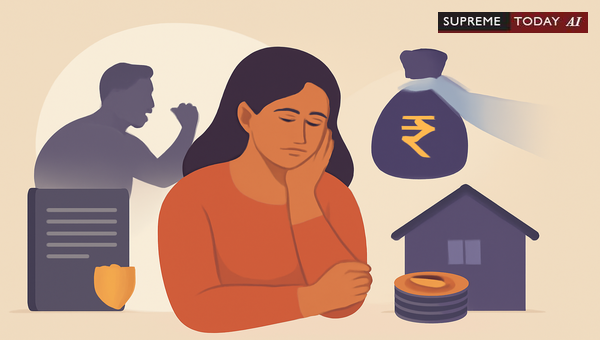
In the realm of family law in India, domestic violence cases often intersect with property disputes, leaving many women wondering about their rights. Imagine a wife who has endured economic abuse, including deprivation of her personal property or stridhan, and seeks its return under the Protection of Women from Domestic Violence Act, 2005 (DV Act). The pressing question arises: Whether an Aggrieved Wife Entitled to Return of Property from the Respondent Husband under the Domestic Violence Act? This blog delves into this nuanced issue, drawing from judicial precedents and legal principles to provide clarity.
While this post offers general insights, it is not a substitute for professional legal advice. Consult a qualified lawyer for your specific situation.
The DV Act is a landmark legislation designed to protect women from various forms of domestic violence, including economic abuse. Section 3 of the Act defines economic abuse broadly, encompassing deprivation of financial resources, property, or economic opportunities to which the aggrieved person is entitled. 2023 0 Supreme(Bom) 423 Domestic violence is sine qua non for the reliefs to be granted to the aggrieved person under the D.V. Act. The term ‘domestic violence’ has been defined in the said Act. There are various types of domestic violence i.e. physical, mental, sexual, verbal and emotional and economic.
Under the Act, an aggrieved wife can seek multiple reliefs via an application under Section 12:- Protection orders (Section 18)- Residence orders (Section 19), allowing her to stay in the shared household 2018 0 Supreme(Pat) 1720 Apart from the other reliefs, a hapless wife who is subjected to domestic violence is entitled to residence orders under Section 19 and monetary reliefs under Section 20 of the Act.- Monetary reliefs (Section 20), including compensation for injuries and loss- Custody orders (Section 21)- Compensation and damages (Section 22)
Crucially, return of property like stridhan, dowry items, or other belongings falls under monetary reliefs or compensation, especially if linked to economic abuse. Courts have granted refunds of dowry and house rent in such cases. 2023 0 Supreme(Bom) 423 Monetary relief, house rent, refund of dowry and compensation.
A common misconception is that the domestic relationship must be ongoing at the time of filing. However, courts have clarified that a woman who previously lived in a domestic relationship and suffered domestic violence can still file for relief, even if the relationship has ended. 2022 5 Supreme 542 2021 8 Supreme 468 A woman must have a subsisting domestic relationship with the respondent to claim relief under the DV Act. However, even if the domestic relationship has ceased at the time of filing, if the woman has previously lived in a domestic relationship and has been subjected to domestic violence, she is entitled to file for relief.
This is vital for wives separated or divorced. For instance, a wife subjected to ouster from the shared household retains rights to at least a room if she lived there previously. 2018 0 Supreme(Pat) 1720 Opp. party no.2 lived in the house of question and entitled to at least one room in the aforesaid house.
Moreover, Section 17 guarantees the right to reside in the shared household, reinforcing property-related protections. 2017 0 Supreme(All) 1258 The reliefs which can be granted by the Magistrate under the Domestic Violence Act, 2005 are as follows: (i) Right to reside in a shared household-Section 17;
Remarriage introduces complexity. Generally, a remarried divorced woman loses entitlement to maintenance from her former husband under Section 125 CrPC. 1995 0 Supreme(SC) 764 2000 2 Supreme 108 A divorced woman who has not remarried is entitled to maintenance under Section 125 of the Code of Criminal Procedure, 1973. However, if she remarries, her entitlement to maintenance from her former husband typically ceases.
However, arrears of maintenance or prior-granted reliefs under the DV Act may persist if domestic violence was established before remarriage. 2016 4 Supreme 481 2020 6 Supreme 613 Arrears of maintenance can be claimed as long as the relationship was recognized under the DV Act and domestic violence was established.
For property return, remarriage does not automatically extinguish claims to stridhan or deprived assets, as these are her absolute property. Courts emphasize proving economic abuse. 2013 8 Supreme 416 Economic abuse is recognized as a form of domestic violence, which includes deprivation of financial resources.
In one case, even after judicial separation, the wife remained an 'aggrieved person' eligible for reliefs. 2015 0 Supreme(SC) 1065 A wife remains an aggrieved person under the DV Act even after judicial separation, which does not terminate the relationship for the purposes of claiming relief.
Courts require proof of domestic violence before granting reliefs. 2021 0 Supreme(Del) 731 The proceedings under DV Act require a finding that the husband is guilty of domestic violence and only then the Magistrate could proceed to adjudge upon the reliefs sought by the wife.
Key rulings highlight:- No domestic violence, no relief: If allegations lack evidence, claims for monetary relief, dowry refund, or property fail. 2023 0 Supreme(Bom) 423- Stridhan recovery: In divorce cases involving cruelty, courts direct return of stridhan. 2017 0 Supreme(All) 2278 Marriage dissolved, directed to return ‘Stridhan’.- Maintenance despite earning capacity: Husbands must provide for wives and children, even if wives earn modestly. 2016 0 Supreme(Mad) 2829 The central legal point established in the judgment is the husband's moral and legal obligation to provide maintenance to the wife and child, even if the wife is capable of earning.
Ex-parte orders are possible but subject to appeal, ensuring fairness. 2021 0 Supreme(Del) 731
To strengthen claims for property return:- Gather evidence: Document economic abuse, such as withheld stridhan or financial deprivation.- File promptly: Applications under Section 12 must establish past or ongoing violence. 2017 0 Supreme(All) 1258 Woman, who was living in a shared house in past... could also file an application under D.V. Act.- Seek interim relief: Courts can grant immediate monetary or residence orders.- Consider remarriage timing: Advise on impacts before proceeding. 2016 4 Supreme 481 2014 0 Supreme(SC) 984
Legal counsel is essential to navigate overlaps with CrPC Section 125 or HMA provisions.
An aggrieved wife may be entitled to the return of property from her husband under the DV Act if economic abuse or domestic violence is proven, regardless of whether the relationship subsists. Remarriage typically ends future maintenance but not arrears or property claims tied to past wrongs. Courts prioritize evidence and fairness, as seen in precedents affirming residence rights and stridhan recovery.
Key Takeaways:- Prove domestic violence for any relief. 2023 0 Supreme(Bom) 423- Past shared household living suffices for filing. 2022 5 Supreme 542- Economic abuse covers property deprivation. 2013 8 Supreme 416- Arrears survive remarriage in many cases. 2016 4 Supreme 481
Stay informed, document everything, and seek expert help. Women's rights under the DV Act empower protection and restitution—use them wisely.
References:2022 0 Supreme(SC) 1368 2022 5 Supreme 542 2023 0 Supreme(SC) 1046 2021 8 Supreme 468 2013 8 Supreme 416 2015 0 Supreme(SC) 1065 2016 4 Supreme 481 1995 0 Supreme(SC) 764 2000 2 Supreme 108 2017 0 Supreme(SC) 886 2016 0 Supreme(SC) 655 2018 0 Supreme(SC) 1716 2020 6 Supreme 613 2010 7 Supreme 321 2015 3 Supreme 569 1983 0 Supreme(SC) 202 2020 8 Supreme 225 2014 0 Supreme(SC) 984 2023 0 Supreme(Bom) 423 2021 0 Supreme(Del) 731 2018 0 Supreme(Pat) 1720 2017 0 Supreme(All) 2278 2017 0 Supreme(All) 1258 2016 0 Supreme(Mad) 2829
#DVActIndia, #WomensRights, #DomesticViolenceLaw
Act but has at any point of time leave or had the right to leave and has been subjected to domestic violence or is later subjected to domestic violence on account of a domestic relationship is entitled to file an application under Section 12 of the D.V. Act. ... Savita Bhanot, (2012) 3 SCC 183, which was subsequently followed in the case of Juveria Abdul (cited supra). ... The learned Ju....
The trial court, after considering the evidence on record, granted reliefs as follows: “1) 1st and 3rd petitioners are restrained from committing any act of domestic violence against the petitions. ... “1) The 1st and 3rd counter petitioners are restrained from committing any act of domestic violence against the 1st petitioner. ... The part of the order relating to domestic#HL....
The trial court, after considering the evidence on record, granted reliefs as follows: “1) 1st and 3rd petitioners are restrained from committing any act of domestic violence against the petitions. ... The part of the order relating to domestic violence and monthly maintenance was upheld. 9. ... “1) The 1st and 3rd counter petitioners are restrained from committing any act of #HL_STAR....
The wife who had shared a household in the past, but was no longer residing with her husband can file a petition under Section 12 if subjected to any act of domestic violence. In V.D. ... by the acts of domestic violence committed by that respondent. ... or that there is a likelihood that the respondent may commit an act of domestic violence. ... Even before the crimina....
The decree of divorce was granted subsequently on 3rd January 2018. ... Proceeding further, the Apex Court has presumed that even if the divorce was obtained on 9th May 2008, the issue was considered whether the erstwhile wife can claim one or the other reliefs under the DV Act if the domestic violence had taken place when the wife lived together in shared household wit....
Domestic violence is sine qua non for the reliefs to be granted to the aggrieved person under the D.V. Act. The term ‘domestic violence’ has been defined in the said Act. There are various types of domestic violence i.e. physical, mental, sexual, verbal and emotional and economic. ... The Domestic Violence Act is a l....
Even though the respondent/wife filed petition under Section 12 of the Protection of Woman from Domestic Violence Act, 2005, after enquiry, the learned Magistrate ordered maintenance of Rs.5000/- to the respondent/wife and also return of jewels. ... Their marriage was solemnized on 06.06.2011 and out of the wedlock a girl baby was born and at the time of filing of Domestic Violence case,....
Atif Iqbal Mansoori, (2014) 10 SCC 736 : (2015) 1 SCC (Cri) 241 : (2015) 1 SCC (Civ) 110 : 2014 SCC OnLine SC 796 at page 750, had held that the monetary reliefs which can be granted under Section 20 are in the nature of compensation for suffering of domestic violence, it is ... Per contra, the learned counsel for the respondent would submit that this Court in Crl.R.C.No.31 of 2019 has already decided that the do....
Therefore, the relief sought by the wife cannot be granted. ... Mr.Manojin, learned Counsel nominated by the Legal Aid Committee for the Respondent submitted that the wife had filed Domestic Violence Case against the Husband only. During the pendency of the Domestic Violence Case, Husband died. Subsequently, she had impleaded the parents of the Husband....
The proceedings under DV Act require a finding that the husband is guilty of domestic violence and only then the Magistrate could proceed to adjudge upon the reliefs sought by the wife. It is submitted that not affording an opportunity of hearing in domestic violence proceedings had serious ramifications and caused grave prejudice to the husband. Learned counsel for the Petitioner submitted that the proceedings under DV Act are not similar in nature to those for maintenance u....
Apart from the other reliefs, a hapless wife who is subjected to domestic violence is entitled to residence orders under Section 19 and monetary reliefs under Section 20 of the Act.
In U.K. through the Civil Partnership Act, 2004, the rights of even the same-sex couple have been recognized. Family Law Act, 1996, through the Chapter IV, titled ‘Family Homes and Domestic Violence’, cohabitants can seek reliefs if there is domestic violence. In USA, the violence against woman is a crime with far-reaching consequences under the Violence Against Women Act, 1994 (now Violence Against Women Reauthorization Act, 2013). Canada has also enacted the Domestic Violen....
The reliefs which can be granted by the Magistrate under the Domestic Violence Act, 2005 are as follows: (i) Right to reside in a shared household-Section 17;
At the time of filing of the petition under Section 24 of the Act, son was aged about 12 years. Respondent/wife has further contended that she had filed an application under the Domestic Violence Act, claiming certain reliefs.
Login now and unlock free premium legal research
Login to SupremeToday AI and access free legal analysis, AI highlights, and smart tools.
Login
now!
India’s Legal research and Law Firm App, Download now!
Copyright © 2023 Vikas Info Solution Pvt Ltd. All Rights Reserved.








