


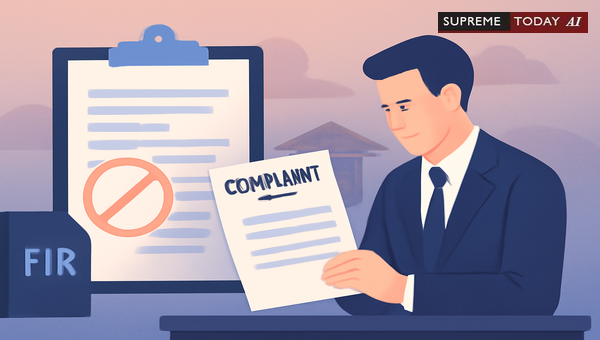
Understanding Rejection of Section 156(3) CrPC Applications and Treatment Under Section 200
Filing a complaint for a can be a critical step in seeking justice, but what happens when your application under is rejected? Many complainants face this scenario, where the directs proceedings under instead. This blog explores the legal framework, grounds for rejection, relevant case laws, and practical recommendations to navigate this process effectively.
Whether you're a victim of fraud, breach of trust, or another , understanding these provisions can help you strategize your next steps. Note that while this post provides general insights based on judicial precedents, it is not a substitute for professional legal advice.
Legal Framework: Sections 156(3) and 200 CrPC
Section 156(3) CrPC empowers a to order the police to register a and investigate a without taking cognizance of the complaint first. This is typically used when immediate police action is deemed necessary 2004 0 Supreme(All) 1847.
In contrast, deals with the examination of the complainant and witnesses upon filing a formal complaint, allowing the to inquire before issuing process 2010 0 Supreme(All) 228.
The interplay between these sections often arises when an application under Section 156(3) lacks certain elements, leading Magistrates to treat it as a complaint under Section 200.
Grounds for Rejection of Section 156(3) Applications
Magistrates have discretion to reject an application under Section 156(3) and proceed under Section 200 in specific circumstances. Here are the key grounds:
Insufficient Grounds: If the application fails to disclose sufficient grounds for police investigation, rejection is warranted. For example, a may hold that no sufficient grounds were made to register a complaint, allowing the complainant to file under Section 200 2020 1 Supreme 720.
Lack of : When facts do not constitute a , the may treat it as a complaint under Section 200. Courts have clarified that applications stating facts can proceed accordingly 2004 0 Supreme(All) 1847.
's Discretion: Magistrates can convert an application disclosing a into a complaint if it meets formal criteria. However, lacking these, rejection follows 2007 0 Supreme(All) 794 2010 0 Supreme(All) 228.
Absence of Formal Complaint: An application under Section 156(3) is not inherently a formal complaint under . Without one, it cannot be treated as such 1993 0 Supreme(All) 1.
These grounds ensure that police resources are not misused for non-cognizable matters, shifting the burden back to the complainant for inquiry under Section 200.
When Can an Application Be Treated as a Complaint Under Section 200?
Judicial precedents affirm that applications under Section 156(3) can be treated as complaints under Section 200 if they meet definitional criteria. In Rambabu Gupta, it was held that such applications could be treated as complaints for practical purposes 2007 0 Supreme(All) 2519.
Further, courts have relied on interpretations. The in Mohd. Yousuf Vs Afaq Jahan (2006) 1 SCC 627 clarified this, leading to rulings like: An application under Section 156(3) Cr.P.C. can be considered as a Complaint under Section 200 Cr.P.C. 2017 0 Supreme(Del) 2714. In one case, impugned orders were set aside, remanding the matter for Section 200 proceedings 2017 0 Supreme(Del) 2714.
However, not all cases allow automatic conversion. In a petition questioning this, the court affirmed the 's jurisdiction to treat it as a complaint, examine witnesses, and dismiss if no case exists 2017 0 Supreme(Chh) 150. The treated the complaint under Section 200 of CrPC and recorded statements of complainant and her witnesses before dismissal 2017 0 Supreme(Chh) 150.
Additional sources reinforce this: The application under Section 156(3) Cr.P.C. was treated as complaint in matters involving 2022 0 Supreme(All) 1337. Similarly, revisions have upheld treating applications under Sections 200 and 202 when Section 156(3) is inappropriate
.
Case Law Highlights and Judicial Trends
Rejection and Revision Rights: Rejection of a Section 156(3) application is amenable to , with prospective accused entitled to a hearing. However, may not always be revisable 2015 0 Supreme(All) 3479. The court noted: The rejection of an application under Section 156(3) Cr.P.C. is amenable to , and the prospective accused is entitled to an opportunity to be heard 2015 0 Supreme(All) 3479.
Practical Treatment: In Mohan Shukla Vs State of Uttar Pradesh (2004 Law Suit (All) 1322), an application was deemed a complaint, preventing consignment to records without Section 200 proceedings 2017 0 Supreme(Del) 2714.
Dismissal After Inquiry: Even after treatment under Section 200, Magistrates must apply mind to material on record, including witness statements. Processes were upheld where inquiry was complete 2022 0 Supreme(All) 1337.
No Interference in Proper Treatment: Higher courts have rejected revisions where treating under Section 156(3) as a complaint was just, proper and legal 2023 Supreme(Online)(ALL) 11042.
These cases illustrate a balanced approach: Magistrates prioritize efficiency while safeguarding complainant rights.
Key Takeaways and Recommendations
An application under Section 156(3) CrPC may be rejected and treated under Section 200 when:- It lacks sufficient grounds or elements.- No formal complaint exists.- exercises discretion appropriately.
Recommendations:- Bolster Your Application: Support Section 156(3) filings with clear facts of a to minimize rejection risk.- Prepare for Alternatives: If rejected, promptly file a formal complaint under Section 200, as complainants retain this right.- Seek Inquiry: Expect witness examination; ensure strong evidence.- Appeal if Needed: Revisions are available for erroneous rejections.
In conclusion, while Section 156(3) offers swift police action, its rejection under Section 200 provides a viable judicial pathway. Understanding these nuances empowers complainants. Always consult a legal expert for case-specific guidance, as outcomes depend on facts and judicial discretion.
References: 2020 1 Supreme 720 2004 0 Supreme(All) 1847 2007 0 Supreme(All) 794 2010 0 Supreme(All) 228 1993 0 Supreme(All) 1 2007 0 Supreme(All) 2519 2023 Supreme(Online)(ALL) 11042
2022 0 Supreme(All) 1337 2017 0 Supreme(Del) 2714 2017 0 Supreme(Chh) 150 2015 0 Supreme(All) 3479 #CrPC, #Section156, #LegalInsights












