


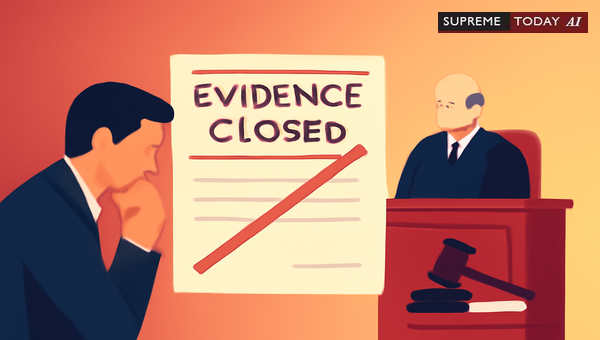
What Happens If Court Terminates in an NI Act Case?
In Indian criminal trials, including those under the , the presentation of is a critical stage. But what if the court abruptly terminates or closes the accused's (often called the )? This common query arises: Yadi NI Act ke kisi mamle mein abhiyukt ka pratiraksha sakshya court ne samapt kar diya ho to kya hoga? (If in any NI Act case, the court has terminated the accused's , what will happen?).
This situation can feel alarming for the accused, potentially tilting the scales toward conviction. However, Indian law provides safeguards under the , ensuring fair trial rights under . This post explores the implications, procedures, and remedies, drawing from judicial precedents. Note: This is general information based on legal principles and cases; consult a qualified lawyer for advice specific to your case.
Understanding Termination of
What Does It Mean?
The termination of signifies the court's decision to end the phase where the accused (abhiyukt) or their counsel presents witnesses, documents, or other proof. This typically happens under (1) after prosecution evidence concludes, but courts may close it early due to:- Non-appearance of defense witnesses.- Failure to produce evidence despite opportunities.- Procedural delays or .
As noted in rulings, courts exercise but must act judiciously to uphold fair trial rights. 2004 0 Supreme(All) 655 2004 0 Supreme(All) 660
In NI Act cases (e.g., cheque bounce), where prosecution often relies on under , a truncated defense can weaken , making conviction more likely if prosecution evidence holds.
Reasons Courts May Terminate
- Repeated adjournments: Defense counsel's failure to summon witnesses leads to closure under .
- Frivolous evidence: Courts prevent .
- Procedural lapses: Like not filing witness lists timely under .
A key principle: Mere bichhar se yadi koi pakshkar koi sakshya prastut karma chata hai or wo mukdme ke uchit nirnay hetu mahtawpurn ho sakta hai to usko prastut karne ki anumati di jani chaiya. (If any party wants to present important evidence for just decision, permission should be granted.) 2013 0 Supreme(Pat) 478
Key Legal Consequences
1. Progression to Judgment Phase
Post-termination, the court proceeds to arguments and judgment under . The judge evaluates:- Prosecution evidence (e.g., cheque, complaint in NI Act).- Any already presented.- and .
If prosecution proves its case , conviction follows. In NI Act matters, this often means fines or imprisonment up to 2 years. 2013 0 Supreme(All) 178
Impact on Accused: Without full defense, crucial (e.g., challenging cheque issuance) may be absent, disadvantaging the case. However, courts must consider if termination was justified. 2004 0 Supreme(All) 2498
2. Right to Fair Trial and
Courts have discretion under to recall witnesses if justice demands, even post-closure. But abrupt termination without cause violates .
In a related precedent on evidence management: The court allowed witness recall but barred new adverse documents not in the investigation report, emphasizing fairness. 2013 0 Supreme(Pat) 478
3. Appeal and Revision Rights
Conviction? Don't despair:- Appeal to Sessions/High Court under : Challenge termination as or fair trial violation.- Grounds: Denial of opportunity to present vital evidence, improper exercise of discretion.
Allahabad cases affirm appeals succeed if termination prejudices defense. 2009 0 Supreme(All) 353 2010 0 Supreme(All) 1526
Insights from Related Precedents
While NI Act specifics are procedural, parallels exist in IPC cases:
Abetment Cases (): Courts scrutinize evidence closure impacts. In one bail denial, chats showed accused's influence frustrating the deceased, mirroring how incomplete defense harms. 2022 0 Supreme(UK) 310 The court inferred abetment from circumstances, stressing full evidence phases. 2022 0 Supreme(Del) 2004
: In a murder conviction upheld, false explanations under post-evidence closure incriminated the accused. Neighbors' testimony sufficed despite limited defense. 2015 0 Supreme(Del) 741
Witness Reliability: Termination doesn't absolve prosecution's burden. In a POCSO acquittal, inconsistent prosecutrix testimony led to benefit of doubt, even with medical evidence gaps. 2019 0 Supreme(Del) 546
Labor analogies (though civil) use sevayen samapt (services terminated), but courts mandate fairness, akin to criminal evidence.
2008 0 Supreme(All) 1732
In NI Act, shift burden, but closure must allow rebuttal opportunities.
Recommendations for Defense Counsel
- Immediate Review: Scrutinize court order for reasoning. File applications under CrPC 311 for recall if evidence is material.
- Document Everything: Preserve records of witness summons attempts.
- Prepare for Judgment: Submit written arguments highlighting prosecution weaknesses.
- Appeal Strategy: Focus on Article 21 violations. Precedents like guide bail/appeals in abetment-like scrutiny. 2022 0 Supreme(UK) 310
Pro Tip: In NI Act, emphasize presumption rebuttal via cross-examination, even if DW closes.
Conclusion and Key Takeaways
Court-ordered termination of in NI Act or IPC cases shifts proceedings to judgment, potentially leading to conviction but opens appeal avenues. Courts must balance expedition with fairness—any unjust closure is challengeable.
Key Takeaways:- Termination often due to procedural lapses; appeal if prejudicial.- Right to full defense under CrPC; invoke Section 311 if needed.- Prepare robustly for appeals, citing Allahabad/Delhi precedents. 2010 0 Supreme(All) 1860 2004 0 Supreme(All) 1513 2014 0 Supreme(All) 3307 2020 0 Supreme(Del) 1509
Stay proactive. For tailored guidance, engage legal experts promptly. Justice delayed isn't denied if rights are asserted.
This post references judgments like 2004 0 Supreme(All) 655 2004 0 Supreme(All) 660 2004 0 Supreme(All) 2498 2013 0 Supreme(All) 178 from Allahabad and others for educational purposes.
#NILaw #CriminalProcedure #DefenseRights














