SupremeToday Landscape Ad
AI Thinking

AI Thinking...

Searching Case Laws & Precedent on Legal Query.....!

Scanned Judgements…!

Checking relevance for IN RE: INTERPLAY BETWEEN ARBITRATION AGREEMENTS UNDER THE ARBITRATION AND CONCILIATION ACT 1996 AND THE INDIAN STAMP ACT 1899 VS . ...

Checking relevance for UNION OF INDIA VS SINGH BUILDERS SYNDICATE. ...

2009 0 Supreme(SC) 382 : The court observed that arbitration clauses requiring serving officers (such as engineers) of government entities to act as arbitrators are common in construction contracts, but such provisions must be balanced against the requirements of independence and impartiality under the Arbitration and Conciliation Act, 1996. The court noted that when such serving officers are frequently transferred or fail to act promptly, the arbitration process becomes ineffective and delayed. In this case, the repeated transfers of nominated engineers led to the tribunal becoming non-functional, justifying the appointment of a retired judge as a sole arbitrator. The court emphasized that government bodies should consider phasing out arbitration clauses requiring serving officers and instead encourage professionalism in arbitration, suggesting that reliance on technical experts like engineers may not always ensure effective dispute resolution. This implies that while engineers may be technically suitable, their appointment can lead to procedural delays and lack of independence, making judicial appointment more effective in practice.Checking relevance for Central Organisation for Railway Electrification VS ECI SPIC SMO MCML (JV) A Joint Venture Company...

Checking relevance for VOESTALPINE SCHIENEN GMBH VS DELHI METRO RAIL CORPORATION LTD. ...

2017 2 Supreme 289 : The legal documents indicate that while disputes in building contracts may involve technical issues requiring engineering expertise, it is not necessary that all disputes be resolved solely by engineers. The court emphasizes that arbitration panels should be broad-based and include professionals from diverse fields, including engineers (from both public and private sectors), legal experts (such as judges and lawyers), and accountants, depending on the nature of the dispute. This is because disputes may involve purely or substantially legal issues or accountancy dimensions, and a multidisciplinary panel enhances confidence in the impartiality and independence of the arbitral process. Therefore, the documents support a balanced approach where the composition of the arbitral tribunal depends on the nature of the dispute, rather than mandating engineers over judges.Checking relevance for Parbhat General Agencies VS Union Of India...

Checking relevance for Kalyan Toll Infrastructure Ltd VS Union of India...

2024 0 Supreme(Del) 505 : The legal documents establish that while disputes in building contracts may involve technical issues requiring engineering expertise, the appointment of arbitrators should not be limited exclusively to engineers. The Supreme Court in Voestalpine emphasized that arbitration panels must be broad-based and inclusive of professionals from diverse backgrounds, including lawyers, judges, and accountants, especially when disputes may involve complex legal, financial, or technical issues. The court rejected the restriction of panels to only retired government or public sector engineers, stating that such limitations could undermine the perception of impartiality and independence. Therefore, it is not necessarily better to have arbitration by engineers alone; a balanced, broad-based panel including legal and technical experts is essential to ensure fairness, confidence, and legitimacy in arbitration, particularly in government contracts.Checking relevance for Margo Networks Pvt. Ltd. VS Railtel Corporation of India Ltd. ...

2023 0 Supreme(Del) 4876 : The Supreme Court in Voestalpine Schienen GmbH v. Delhi Metro Rail Corporation Ltd. (2017) 4 SCC 665 emphasized that arbitration panels should not be restricted to retired engineers or government employees. The Court held that the panel must be broad-based and include professionals from diverse fields such as law, engineering, and accountancy, especially since disputes in building contracts may involve complex legal, technical, or financial issues. The Court directed that the panel should include ''''engineers of prominence and high repute from private sector'''' as well as ''''judges and lawyers of repute'''', indicating that arbitration in construction disputes should not be limited solely to engineers, but should also involve legal experts to ensure impartiality and comprehensive dispute resolution. This demonstrates that while engineers may be relevant, a balanced panel including legal professionals is essential for fairness and credibility in arbitration.Checking relevance for Gangotri Enterprises Ltd. vs General Manager Northern Railaways...

Gangotri Enterprises Ltd. vs General Manager Northern Railaways - Delhi (2022)

: The legal documents clarify that while disputes in building contracts may involve technical issues requiring engineering expertise, it is not necessary that all disputes be resolved solely by engineers. The court emphasizes that arbitration panels should be broad-based and include professionals from diverse fields, including legal experts (judges and lawyers of repute) and accountants, because disputes may involve complex legal, financial, or non-technical issues. The court explicitly rejects the idea of limiting the panel to only engineers, citing the need for neutrality, impartiality, and confidence in the arbitration process. This is reinforced by the Supreme Court’s judgment in Voestalpine Schienen GMBH, which holds that panels must include prominent engineers from the private sector, legal professionals, and other experts to avoid any reasonable apprehension of bias. Therefore, while engineers may be appropriate in technical disputes, a balanced and diverse panel is essential for fair arbitration in building contracts.

AI Overview

AI Overview...

  • Preference for arbitration by engineers over judges - Building contracts often specify arbitration by engineers or technical experts rather than judges, based on the technical nature of disputes and the expertise required ["1981 0 Supreme(Bom) 338"] ["1949 0 Supreme(Cal) 312"] ["1949 0 Supreme(Cal) 200"].

  • Validity and enforceability of engineer/arbitrator clauses - Courts have consistently upheld clauses that designate engineers or technical professionals as arbitrators, especially when such clauses are clear and incorporated into the contract. For example, clauses appointing engineers or superintending engineers as arbitrators have been deemed valid and enforceable ["1949 0 Supreme(Cal) 312"] ["1949 0 Supreme(Cal) 200"] ["2018 0 Supreme(MP) 759"].

  • Role of engineers as certifiers and arbitrators - While engineers often serve as certifiers or approval authorities, their role as arbitrators is recognized when the contract explicitly provides for dispute resolution through their appointment. However, there are distinctions made between administrative certifiers and arbitrators, with courts emphasizing the importance of clear contractual terms ["1981 0 Supreme(Bom) 338"] ["2025 0 Supreme(Cal) 188"].

  • Arbitration clauses involving engineers are generally upheld unless vague or ambiguous - Courts tend to favor arbitration clauses that explicitly specify engineers or engineers' organizations as arbitrators, and they resist judicial interference unless the clause is uncertain or improperly drafted ["1949 0 Supreme(Cal) 312"] ["1949 0 Supreme(Cal) 200"] ["2003 0 Supreme(Gau) 130"].

  • Technical expertise enhances arbitration quality - Having engineers as arbitrators is often considered advantageous because their technical knowledge allows for better understanding and resolution of complex building disputes, reducing the likelihood of errors that might occur with judicial adjudication ["1981 0 Supreme(Bom) 338"] ["2003 0 Supreme(Gau) 130"].

  • Conclusion - In disputes over building contracts, arbitration by engineers is generally preferable and legally supported, especially when the contract explicitly designates engineers or technical experts as arbitrators. Courts uphold such clauses, recognizing the technical proficiency of engineers as beneficial for effective dispute resolution, thus making engineer-led arbitration a better option than judicial proceedings ["1981 0 Supreme(Bom) 338"] ["1949 0 Supreme(Cal) 312"] ["1949 0 Supreme(Cal) 200"].

Engineering Expertise and Independent Panels in Building Contract Arbitration

Engineers vs. Judges: Who Makes the Better Arbitrator in Building Contract Disputes?

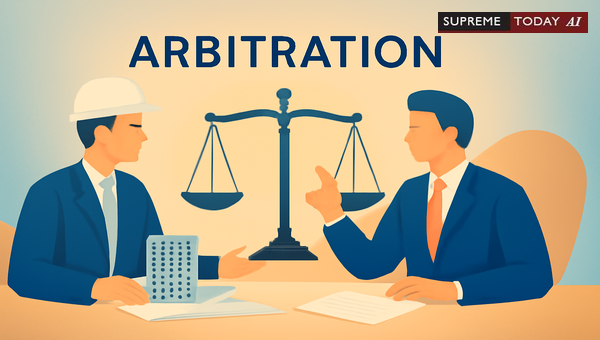
In the complex world of construction, disputes over building contracts can arise from technical specifications, material quality, or project delays. A common question emerges: In disputes on building contracts, is it not better to have arbitration by engineers and not by judges? This debate strikes at the heart of effective dispute resolution, balancing legal acumen with technical know-how. While judges excel in legal interpretation, engineers bring specialized insight into the nuts and bolts of construction challenges.

This article delves into judicial perspectives, key cases, and best practices, drawing from legal precedents. Note that this is general information and not specific legal advice—consult a qualified attorney for your situation.

Why Technical Expertise Matters in Construction Arbitration

Building contracts often involve intricate technical issues, such as structural integrity, compliance with engineering standards, or deviations from blueprints. Courts have repeatedly emphasized that arbitrators with engineering backgrounds are better equipped to handle these matters fairly and efficiently.

For instance, legal findings highlight that arbitration in building or construction disputes benefits from arbitrators with technical expertise 2024 0 Supreme(Del) 505. The Supreme Court and High Courts advocate for panels including engineers of prominence and high repute from the private sector to ensure understanding of technical intricacies 2024 0 Supreme(Del) 505. This preference stems from the recognition that judges, while legally trained, may lack the practical knowledge needed for specialized disputes.

Courts' Push for Broad-Based Arbitration Panels

To promote impartiality, judgments stress broad-based panels comprising engineers, lawyers, and other experts. Restricting panels to government engineers risks bias, so including private sector professionals instills confidence. As noted, the panel should comprise of persons with legal background like Judges and Lawyers of repute as it is not necessary that all disputes that arise, would be of technical nature 2024 0 Supreme(Del) 505.

This balanced approach addresses diverse dispute types:- Technical issues: Engineers evaluate designs and executions.- Legal/contractual matters: Judges or lawyers interpret clauses.- Financial aspects: Accountants handle cost overruns.

Such panels, as recommended in multiple cases, ensure neutrality and competence 2009 0 Supreme(SC) 382 2024 0 Supreme(Del) 505 2023 0 Supreme(Del) 4876.

Key Cases Supporting Engineers as Arbitrators

Precedents reinforce this trend. In one ruling, courts directed the creation of diverse panels for Delhi Metro Rail Corporation (DMRC) disputes, prioritizing technical experts 2024 0 Supreme(Del) 505. Similarly, Gujarat Public Works Contracts Disputes Arbitration Tribunal cases underscore that works contracts fall under specialized arbitration, favoring experienced graduate engineers at senior levels 2026 Supreme(Online)(Del) 1803 2021 Supreme(Online)(Guj) 457.

However, impartiality is crucial. In Jawahar Mal and Sons v. Punjab State, the court refused a stay of proceedings because the Superintending Engineer had pre-expressed opinions, creating a legitimate impression that he might not be able to form an independent view 1958 0 Supreme(P&H) 159. Drawing from Bristol Corporation v. John Aird and Co. (1913 A.C. 241), courts exercise discretion to intervene if bias is evident, prioritizing independence and impartiality 2009 0 Supreme(SC) 382.

Another example involves standard form contracts in building projects, where general references suffice for incorporating arbitration clauses naming engineer-led tribunals 2018 1 Supreme 1 2018 Supreme(Online)(SC) 345. This facilitates swift expert adjudication.

Risks and Exceptions: When Judges May Be Preferred

Not all disputes are purely technical. Legal or financial complexities may require judicial oversight. Exceptions include:- Bias concerns: Serving officers or engineers with prior involvement, as in the Punjab bridge case, may be disqualified 1958 0 Supreme(P&H) 159.- Hybrid disputes: Broad panels mitigate this by including judges 2024 0 Supreme(Del) 505.- Statutory tribunals: Public works acts mandate engineer qualifications but ensure balance 2021 Supreme(Online)(Guj) 411 2021 0 Supreme(Guj) 285.

Courts have dismissed challenges to awards where arbitrators demonstrated competence, refusing re-appreciation of evidence under Section 37 of the Arbitration and Conciliation Act, 1996 2018 0 Supreme(Guj) 1056. In monorail projects, tribunals examined arbitrability without preconditions, affirming access to arbitration 2019 0 Supreme(Bom) 880.

Arbitration Clauses in Building Contracts: Best Practices

To leverage engineers effectively:1. Draft inclusive clauses: Specify broad panels with engineers, lawyers, and specialists

Gangotri Enterprises Ltd. vs General Manager Northern Railaways - Delhi (2022)

.2. Avoid restrictions: Prevent bias by diversifying beyond public sector 2009 0 Supreme(SC) 382.3. Incorporate standards: Reference standard forms for seamless arbitration 2018 1 Supreme 1.4. Ensure qualifications: Mandate graduate engineers with public works experience 2026 Supreme(Online)(Del) 1803.

Historical cases like State of Bihar v. Karam Chand Thapar validate government-authorized references to engineer arbitrators, provided they are impartial 1961 0 Supreme(SC) 168. Co-operative disputes also highlight engineers' suitability for construction matters over generalists 2011 0 Supreme(Guj) 492.

Conclusion: Striking the Right Balance for Fair Resolutions

Generally, arbitration by engineers is preferable for building contract disputes due to their technical prowess, as endorsed by courts favoring expert panels 2024 0 Supreme(Del) 505. Yet, success hinges on impartiality and breadth—purely engineer-led arbitration risks bias, while judge-only panels may miss nuances.

Key Takeaways

  • Prioritize expertise: Engineers for technical cores; lawyers for legal edges.
  • Build diverse panels: Enhance neutrality and efficiency.
  • Watch for bias: Courts intervene if impartiality falters 1958 0 Supreme(P&H) 159.
  • Leverage arbitration clauses: Standard forms streamline processes.

For construction stakeholders, adopting these insights can lead to faster, fairer outcomes. Always tailor strategies to your contract and seek professional guidance.

References: This post synthesizes insights from cited documents. For full texts, refer to legal databases.

#ConstructionArbitration, #BuildingDisputes, #EngineeringLaw
Chat Download
Chat Print
Chat R ALL
Landmark
Strategy
Argument
Risk
Chat Voice Bottom Icon
Chat Sent Bottom Icon
SupremeToday Portrait Ad
logo-black

An indispensable Tool for Legal Professionals, Endorsed by Various High Court and Judicial Officers

Please visit our Training & Support
Center or Contact Us for assistance

qr

Scan Me!

India’s Legal research and Law Firm App, Download now!

For Daily Legal Updates, Join us on :

whatsapp-icon Back to top