


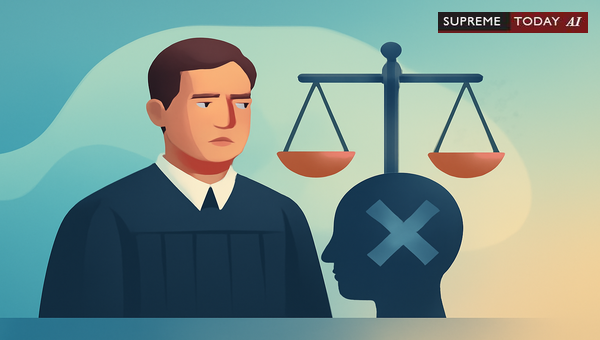
Nemo Debet Esse Judex: & Exceptions
In the realm of justice, impartiality stands as a bedrock principle. Imagine a judge ruling on a case where they have a personal stake – the very foundation of fair adjudication crumbles. This is where the ancient legal maxim comes into play, translating to no one should be a judge in their own cause. Commonly referred to as the , it forms a cornerstone of , ensuring decisions are free from personal interest or prejudice.
This blog delves into the Nemo Debet Esse Judex: & Exceptions, exploring its definition, judicial precedents, applications, and limited exceptions. Whether you're a legal professional, business owner facing administrative actions, or simply curious about fairness in law, understanding this principle is crucial. Note: This is general information and not specific legal advice. Consult a qualified lawyer for your situation.
What is Nemo Debet Esse Judex?
asserts that no individual shall act as a judge in a matter involving their personal interest, as it undermines the integrity of the decision-making process. 2021 0 Supreme(Ori) 366 2020 0 Supreme(Guj) 518 This principle is fundamental to , applicable in judicial, quasi-judicial, and administrative proceedings.
Related maxims reinforce this:- : No man ought to be a judge in his own case, as he cannot be both judge and party. 2021 0 Supreme(Ori) 366- : No one can be both suitor and judge. 2023 0 Supreme(Gau) 928
As noted in historical context, The first rule is '' or ' sua' as stated in (1605) Coke used the form ' esse simul actor et judex....
These have been upheld across judgments, emphasizing impartiality. 2022 0 Supreme(Guj) 1726 2020 0 Supreme(Ker) 815
Judicial Precedents Establishing the Rule
Indian courts have rigorously applied this principle. In , the stressed that proceedings must eliminate any doubt of bias. 2020 0 Supreme(Guj) 518
Similarly, reiterated: no one should be a judge in their own cause, essential for a fair hearing. 2023 0 Supreme(Gau) 928
In disciplinary contexts, where the authority is also the complainant, proceedings are void. 1998 0 Supreme(All) 1165 2010 7 Supreme 970 Courts have quashed orders by the same individual presiding over re-adjudications. 1998 0 Supreme(Ori) 219 1998 0 Supreme(Ori) 285
From other rulings:- In a fair price shop suspension case, the court quashed the order for violating , including , due to lack of notice.
- Income tax reassessment was invalidated for arbitrary actions breaching : The first rule is ‘' or ‘ sua' that is no man shall be a judge in his own cause. 2022 0 Supreme(All) 1031
Application in Administrative and Judicial Contexts
Beyond courts, this rule governs administrative actions. If a disciplinary authority doubles as complainant, it violates . 1998 0 Supreme(All) 1165 2010 7 Supreme 970
In land acquisition disputes, orders were quashed for breaching principles: (ii) Nobody shall be judge of his own cause (nemo debet esse judex in propria sua causa). The court found issues like considering unserved rejoinders. 2015 0 Supreme(Bom) 1930
Selection processes also invoke it. In a Vice-Principal selection challenge, bias allegations failed as: The doctrine of bias emerges from the legal maxim - nemo debet esse judex in causa propria sua. It applies only when the interest attributed to an individual is such, so as to tempt him to make a decision in favour of, or to further, his own cause. 2015 0 Supreme(Del) 531
Professional misconduct probes under the emphasized reasoned decisions: (ii) Nobody shall be judge of his own cause (nemo debet esse judex in propria sua causa) alongside . 2012 0 Supreme(Ker) 350
Even in distributorship terminations, requirements vary by context, but bias remains key. 2021 0 Supreme(Pat) 28
Exceptions to the
While strict, exceptions exist under the . An arbitrator may rule on their own bias if statutes mandate it, but such cases are scrutinized. 2012 0 Supreme(Cal) 295 1998 0 Supreme(All) 1165
These limitations ensure the principle's core – impartiality – isn't undermined. Courts weigh facts, enquiry nature, and rules. 2021 0 Supreme(Pat) 28
Why This Principle Matters Today
In an era of complex administrative decisions – from tax reassessments 2022 0 Supreme(All) 1031 to professional disciplines 2012 0 Supreme(Ker) 350 – bias risks erode public trust. Justice should not only be done but should.... as echoed in precedents. 2022 0 Supreme(All) 1031
Legal practitioners must spot conflicts: is key. Training on bolsters adherence.
Key Takeaways
- Impartiality First: No personal interest in adjudication. 2021 0 Supreme(Ori) 366
- Broad Application: Judicial, administrative, disciplinary. 2020 0 Supreme(Guj) 518
- Precedents Guide: Kraipak, Canara Bank set standards. 2023 0 Supreme(Gau) 928
- Exceptions Rare: Necessity doctrine, strictly applied. 2012 0 Supreme(Cal) 295
- Seek : Prevent challenges and uphold fairness.
Conclusion
safeguards justice's integrity, ensuring decisions reflect fairness, not favoritism. From landmarks to High Court rulings on suspensions and selections, it's a vigilant guardian. Vigilance against bias maintains public faith in law.
References: 2021 0 Supreme(Ori) 366 2020 0 Supreme(Guj) 518 2023 0 Supreme(Gau) 928 1998 0 Supreme(All) 1165 2010 7 Supreme 970 1998 0 Supreme(Ori) 219 1998 0 Supreme(Ori) 285 2012 0 Supreme(Cal) 295
2022 0 Supreme(All) 1031 2021 0 Supreme(Pat) 28 2015 0 Supreme(Bom) 1930 2015 0 Supreme(Del) 531 2012 0 Supreme(Ker) 350
Stay informed, and remember: true justice is blind – and unbiased.
#NemoDebetEsseJudex #JudicialBias #NaturalJustice












