


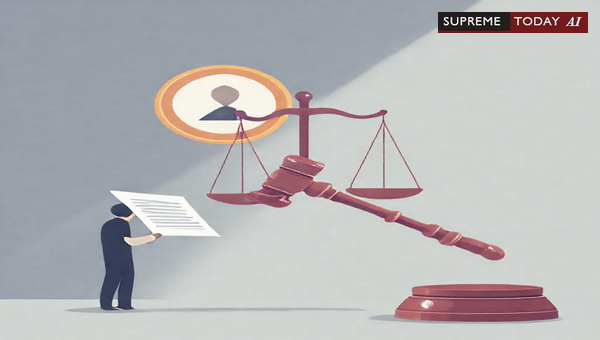
When a Person Acquitted of a Crime Sues the Police Officer Who Investigated the Complaint
Imagine being named in a criminal case, enduring the trial, and walking out of court acquitted—only to discover that the complainant set the law in motion while a police officer simply did his job. Angry and reputation-scarred, you want to sue everyone: the complainant, certainly, but also the investigating officer whose charge-sheet put you in the dock. Can a suit for damages for succeed against an officer who merely investigated a complaint instituted by someone else?
This is the precise question courts have confronted repeatedly: whether civil liability for damages for can be attributed against an officer who has merely investigated a criminal complaint instituted by the original complainant. The short answer is generally no—but the protection is not absolute.
The General Rule: The Shield
A police officer who investigates a complaint registered on someone else's FIR is performing a statutory function. Courts have consistently held that such acts fall within the , creating a discernible nexus between the act complained of and the officer's legal powers and obligations.
In Professor Sumer Chand's case, the Division Bench held that where prosecution was initiated on the basis of an FIR, it was the officer's duty to investigate and file a charge-sheet if necessary, and the act complained of fell within the description of '' 2011 4 Supreme 416. The same principle was applied where an officer prepared a panchnama and a seizure report—the nexus between the act and the statutory duty protected the officer from liability 1993 0 Supreme(SC) 742.
This logic aligns with the older common-law position that a person who does nothing beyond giving information to the police, which he considers true, cannot be sued for —a rule applied by the Andhra Pradesh High Court in T. V. Lakshmojirao v. Somavarapu Venkatappaiah1996 0 Supreme(Kar) 123. An investigating officer occupies an even stronger position, since investigation is not voluntary but mandated.
Why the Investigator Is Different from the Complainant
The tort of traditionally targets the person who . Where a private individual merely lays information before the police without directing the prosecution of any particular person, leaving the prosecutor to exercise independent judgment, liability generally does not attach
HATURUSINGHE v. KUDADURAYA
.Several consequences follow:
- The complainant, not the officer, bears primary exposure—courts have held complainants liable even where police conducted the prosecution, provided the initial complaint was made with malice and falsehood 1960 Supreme(Online)(Ker) 33.
- An officer who investigated and submitted even a negative report cannot be roped in as an accused merely because the original complainant later initiated proceedings against him; such proceedings were quashed as malicious and an 2022 0 Supreme(Mad) 2783.
- Attempting to prosecute an investigating officer under simply because the accused was acquitted has been firmly rejected. One court warned that if officers are going to be exposed to such proceedings in all cases where accused persons are acquitted from all charges, it will directly interfere with independence of authority in conducting an investigation, and quashed the summons
A. Radhika VS Wilson Sundararaj
.
The Crucial Exception: Malice, Bias, and Abuse of Power
The colour-of-duty shield disappears when the officer steps outside bona fide discharge of duty. Public law recognises the tort of , which expressly includes —public authorities may be liable in damages for malicious, deliberate or injurious wrongdoing 1996 7 Supreme 747.
Investigations themselves can be attacked on the ground of bias or on the part of the investigating officer; fair investigation is the foundation of a fair trial, and police abuse of power must be prevented 2022 0 Supreme(Mad) 1133. Where an officer registers a false report, fabricates a panchnama, conducts seizure without independent witnesses, or acts on personal vendetta, the act ceases to be an exercise of statutory duty and may attract civil liability.
Notably, in one appeal the High Court restored a suit against an officer, holding that he only performed his official functions and that absent proof of absence of , no amount of malice could be attributed to him—but the court left open trial-stage scrutiny of the allegations 2021 0 Supreme(Mad) 3001. The threshold is high, but not insurmountable.
What the Plaintiff Must Actually Prove
Sustaining a claim demands more than an acquittal. The plaintiff must establish:
- That criminal proceedings were instituted by the defendant;
- That the proceedings terminated in the plaintiff's favour;
- That the defendant acted without ; and
- That the defendant was actuated by malice2023 0 Supreme(Mad) 2987 and 2025 Supreme(SRI)(SC) 9707.
Courts have stressed that mere acquittal does not establish malice—acquittal on the due to contradictions in evidence does not prove the complaint was false. What matters is the defendant's state of mind and the material available when the proceedings began 2026 Supreme(Online)(Del) 20223.
Malice in law means an intentional act ; legitimate indignation does not qualify, and vague pleadings are insufficient 2006 9 Supreme 883. Finally, the plaintiff must prove —mental agony, loss of reputation, or financial loss—or the suit fails 2025 0 Supreme(P&H) 353. And if the complaint was closed without trial or summons ever being issued, no claim lies at all 2026 0 Supreme(Guj) 379.
Practical Takeaways
- For plaintiffs: target the complainant who instituted the case; sue the investigating officer only if you can plead specific facts showing bias, fabrication, or ulterior motive—not merely a favourable outcome.
- For officers: strict procedural compliance, proper documentation, and independent witnesses strengthen the colour-of-duty defence.
- For practitioners: defend officers by emphasising statutory duty and the plaintiff's heavy burden of proving malice; prosecute claims by focusing on rather than the acquittal itself.
Conclusion
An investigating officer who merely investigates a complaint instituted by another is typically insulated from civil liability for , because his acts fall within the colour of statutory duty. That protection, however, yields to accountability where the investigation is tainted by bias, malice, or deliberate fabrication—in which case may furnish a remedy. Every case turns on its own facts, and outcomes vary with the evidence of motive and conduct; this article is general information, not specific legal advice, so consult a qualified professional about any particular dispute.
#MaliciousProsecution #PoliceLiability #InvestigatingOfficer #MisfeasanceInPublicOffice #TortLaw










